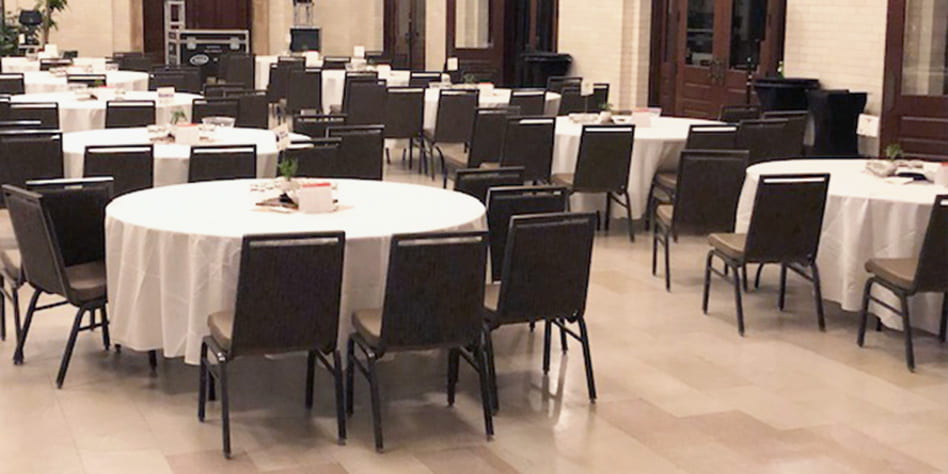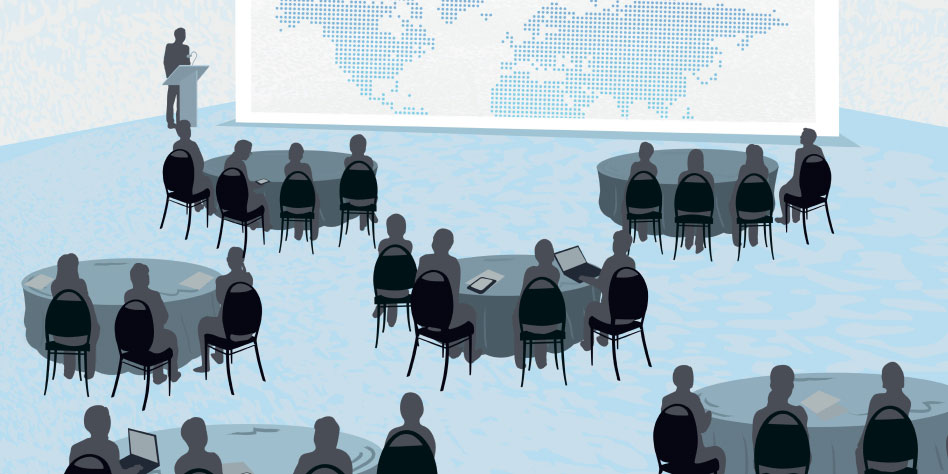
It’s 6:30 a.m.
The conference starts in ninety minutes. Your facilities team unloads the carts, sets up banquet tables, arranges classroom seating, and prepares a room that will transform three more times before the week is over.
In facilities like yours, few pieces of furniture are asked to do more. The same folding table appears at conferences, community events, employee training sessions, banquets, and countless other functions throughout a single month.
Unfortunately, many organizations buy folding tables in bulk based on the wrong criteria.
In trying to make a good business decision, they saddle themselves with higher replacement costs, frustrated setup crews, damaged furniture, and years of operational headaches.
You deserve better. Before your next folding table purchase, let’s step outside. I’ll share with you what I wish someone had told me sooner.
Mistake #1: Focusing Only on Purchase Price
Have you ever walked through your local warehouse store, membership card in hand, pushed forward by dozens of people trying to be the first to claim the items on the shelf? You’re tempted to buy anything from slush machines and 100-packs of batteries to pillowtop mattresses and drift tricycles just because that’s what everyone around you has in their shopping carts. Lately, we’ve noticed cheap folding tables sneaking onto the shelves. Before you grab the industrial push carts and load them with bargain tables for the upcoming events season, remember this:
A lowball sticker will grab your attention, but the least expensive table is not always the most economical choice. If you give in to the urgency of the moment, you’ll end up buying the same cheap table twice or more.
You’ve been in this business long enough to know that the adage is true: You get what you pay for. Lower-quality tables wear down sooner. Jagged table edges snag against fancy dress shirts. Surfaces scratch easily and you must purchase linens. Legs loosen, and your guests must lean their elbows on the edge to keep the table steady. Eventually, your facility must replace its furniture. Sadly, with budget tables, you will replace them far sooner than expected.
A quality folding table may cost more upfront, but it delivers lower lifetime costs through greater durability, reduced maintenance, and fewer replacement purchases. When evaluating tables, don’t base your decision on the tantalizing smell of hot dogs from the food court. Consider warranty coverage, construction quality, and expected lifespan alongside purchase price.
Every cheap table eventually sends an invoice. It just arrives later.
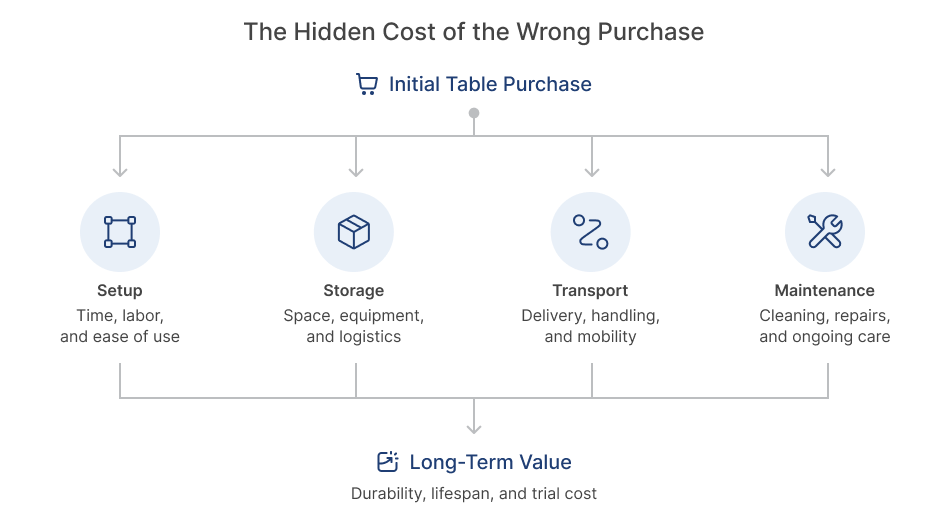
Mistake #2: Failing to Simplify Event Setup and Teardown for Your Team
The purchasing committee loves the new tables.
The facilities team dreads them.
In the ballroom, they look flawless beneath crisp linens, cascading centerpieces, and glowing candlelight. Behind the scenes, it’s a different story. The tables are heavier than expected. Storage carts jolt over doorway thresholds and uneven floors. Event setup and teardown take longer than expected. Every movement demands more lifting than it should.
The disconnect is surprisingly common: the people selecting folding tables are rarely the people moving them.
Meanwhile, facilities staff, event crews, custodians, volunteers, and temporary workers may handle those same tables thousands of times throughout the year. An extra few pounds may seem insignificant on a spec sheet. After loading, unloading, storing, and repositioning dozens of tables before every event, those pounds add up quickly.
When evaluating folding tables, look beyond appearance and price. Lightweight construction, dependable leg-locking systems, and easy maneuverability can save countless hours of labor while reducing strain on the people who make every event possible.
Because the best folding table isn’t the one that looks great for four hours. It’s the one your staff can still appreciate after moving it four thousand times.
Mistake #3: Choosing the Wrong Table for the Space
Not every room needs the same table.
When you walk into a training room with your fingers curled around your laptop, you expect clear sightlines, access to an outlet, the ability to take notes, and enough space for people to move between rows. A banquet should feel comfortable, with an easy layout that welcomes guests. A registration area needs traffic flow. A buffet line needs access. A multipurpose room may need to perform all these functions before the weekend.
Recently, I attended a wedding luncheon with dozens of long tables crammed together to fit the space. There was no room for movement between the tables. While a soda station invited guests to sample the bride’s favorite concoction, and an ice cream bar offered the groom’s mint chocolate chip sundae, nobody could get to them. The taco truck waited patiently outside. People tossed their empty plates to the unsuspecting fool standing at the foot of the table instead of the garbage can.
If it weren’t for all the people, the tables would fit just fine. But events don’t work that way.
Rectangular folding tables create structure and make efficient use of floor space. Use them in classrooms, training rooms, meeting spaces, buffets, registration areas, and back-of-house staging zones. Round tables suit banquets, weddings, fundraisers, and formal dining because they encourage conversation and soften the feel of the room.
One table shape cannot do it all.
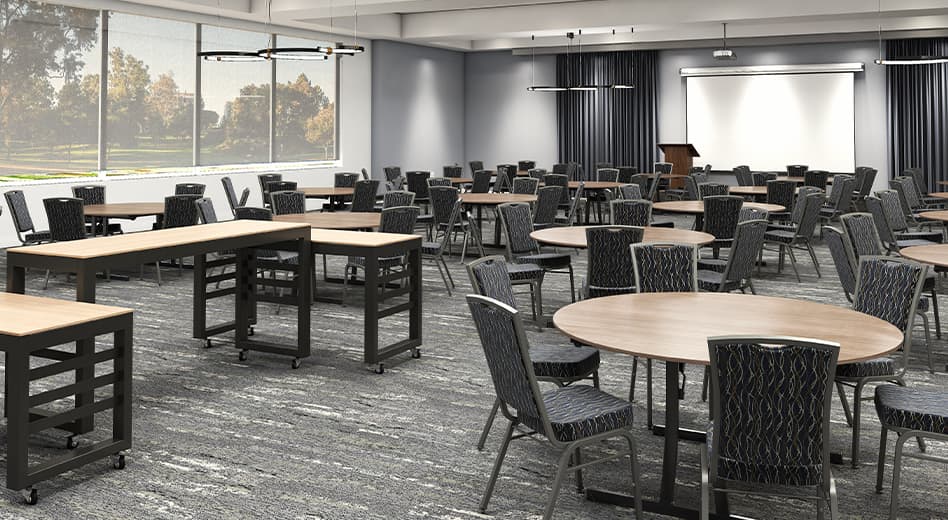
Before purchasing folding tables, think beyond how many people you need to seat. Consider how the room needs to move, where people will gather, what staff will need to access, and how often the layout will change.
For many facilities, the best solution is not one universal table. It is a thoughtful mix of table shapes that gives your team the flexibility to set the room up correctly the first time.
Because it would be a shame for all that mint chocolate chip ice cream to go to waste.
Mistake #4: Forgetting About Storage and Transportation
The new tables arrive on schedule.
Your team unloads them, admires them, and starts planning where to use them.
Then someone asks the question nobody considered during the purchasing process:
“Where are we going to put them?”
At that moment, the project shifts from purchasing furniture to managing it.
Your storage room is already crowded. Your table carts barely fit through the doorway. Your staff starts moving equipment around to create space. Someone leans a few tables against the wall “just for now.”
Six months later, those quick fixes create daily frustrations.
Staff members spend extra time wrestling tables from crowded storage rooms. They maneuver carts through tight hallways and around obstacles. They hunt for equipment that never seems to be where it belongs. Along the way, table edges get chipped, surfaces get scratched, and setup crews lose valuable time before every event.
Most organizations focus on how tables perform during an event.
You know better.
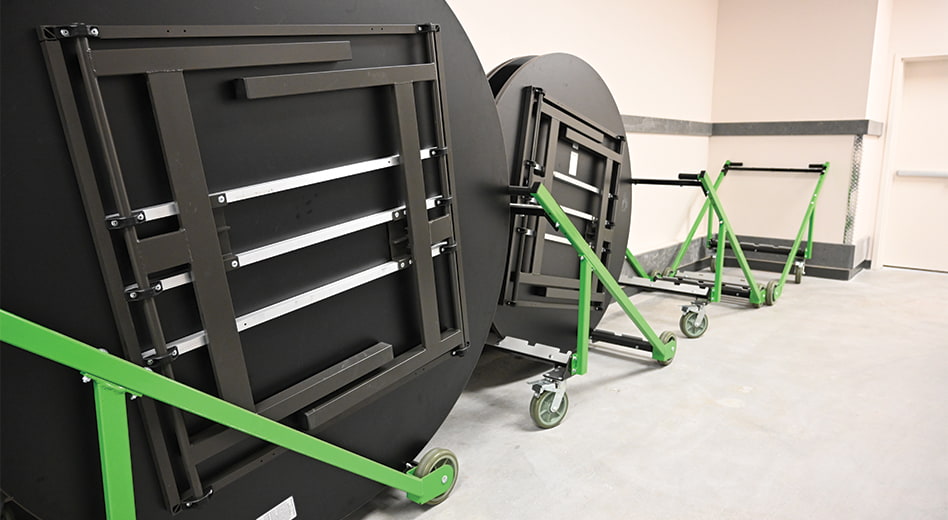
Tables spend 90 percent of their lives being stored, moved, stacked, transported, and unloaded, and 10 percent supporting guests. Every step in that process affects efficiency, labor, and the lifespan of the furniture.
Before you place an order, walk the route your staff will take. Measure doorways. Check the storage room dimensions. Evaluate cart capacity. Think about how often crews will move the tables and who will move them. A poorly designed storage solution increases setup time, creates bottlenecks, and contributes to accidental damage.
Because when storage and transportation don’t work, your staff pays the price every single day.
The event may last a few hours. You deal with the logistics for years.
Mistake #5: Ignoring Long-Term Maintenance for Your Folding Table Purchase
A folding table wears down one event at a time.
At first, the damage seems minor. A nicked edge here. A dull spot there. A stain that takes more effort to remove than it should. After every event, those small issues start changing how the table looks, cleans, and performs.
Your staff ends up spending more time scrubbing surfaces. Crews start hiding damaged tables under linens. What once looked professional begins to look tired long before the table has reached the end of its useful life.
You fight a constant battle against small details. The last thing your team needs is furniture that creates more issues. Every stain that won’t come out, and every premature replacement adds one more task to an already crowded day.
A folding table should not create extra work every time someone uses it.
Long-term maintenance deserves a nod before you buy, not after problems arise. Look for impact-resistant table edges, durable construction, and commercial-grade laminate surfaces that resist scratches, stains, and heat damage. Choose tables your team can clean, disinfect, move, and reuse without treating every surface like it needs special treatment.
Warranty coverage also reveals how much confidence a manufacturer has in its product. For example, MityLite’s ABS folding tables carry an industry-leading 15-year warranty. In a category where many warranties are measured in a handful of years, that level of coverage speaks volumes about long-term durability and performance.
The real test is not how the table looks on delivery day; it is how well it holds up after the years of service nobody puts in the brochure.

Folding Table Buying Checklist:
✓ Total cost of ownership
✓ Setup efficiency
✓ Appropriate sizing
✓ Storage compatibility
✓ Transportation needs
✓ Long-term durability
How to Buy Folding Tables in Bulk Without Regretting the Decision Later
When our customers ask questions about folding tables, they rarely ask about the tables themselves.
They ask how long setup will take. Whether staff can move them safely. How many will fit in storage. Which surfaces are easiest to clean. Whether the tables will still look professional five or ten years from now.
Those questions reveal something important:
Like you, facilities managers are not really purchasing folding tables. They want fewer headaches, more flexibility, lasting durability, and peace of mind. The right tables help your team set up faster, work safer, store equipment more efficiently, and adapt rooms to whatever tomorrow’s schedule demands. The wrong tables create friction that your staff must overcome every day.
The best purchasing decisions look beyond price tags and product specifications. They consider the people moving the tables, the spaces storing them, and the years of use that lie ahead.
Tomorrow, at 6:30am, your crew will begin another setup. You might set out a tray of muffins on a folding table for your early morning crew. That table offers more than a bite of breakfast. That table is part of every setup, every teardown, every event, every training session, every banquet, and every meeting your facility hosts. It shows up.
Choose wisely, and your tables become one less thing your team must think about.
For a facilities manager, that may be the highest compliment a piece of furniture can earn.

Ready for a quote?
Chat with a dedicated sales rep today!
Products Featured in This Article

Classic Banquet Chair
6 Chair Back Styles, 3 Seat Styles

Reveal Linenless Round Table
3 Table Sizes, 2 Table Heights

Imara Nesting Tables
3 Number of Tables, 6 Largest Table Size
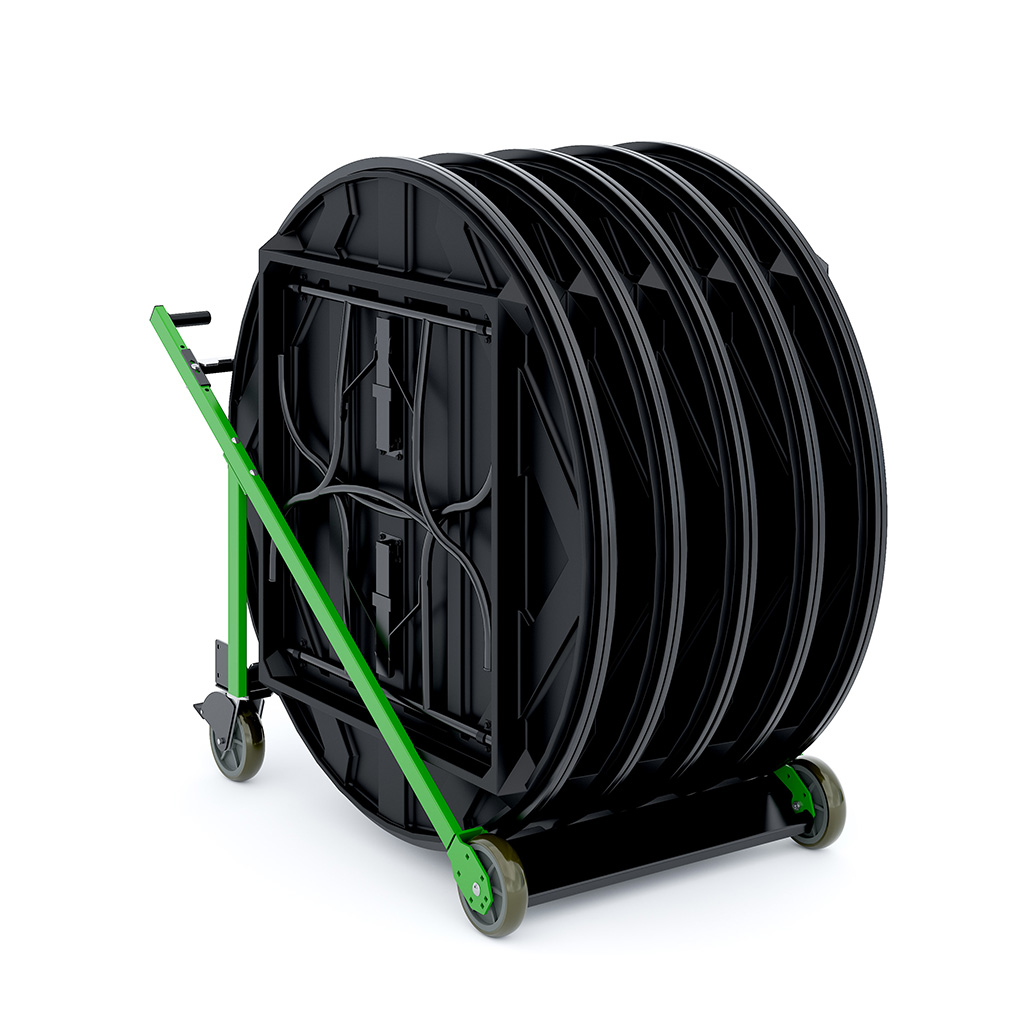
XpressPort Round Table Cart
2 Cart Sizes