Running a successful venue takes more than just a prime location. It requires work, planning, decisions, and a clear-cut vision for the experiences you want to offer a broad range of clients.
Let’s talk about the importance of choosing venue furniture. Regardless of your venue type, each piece should align with your booking strategy and reinforce your space’s overall aesthetic.
Step One: What Type of Venue Do You Operate?
Filter every furniture decision you make through the lens of your venue type. Be sure to evaluate materials, style choices, and storage options.
- Wedding venues: Prioritize elegance and adaptability; furniture needs to photograph well, support different themes, and maintain years of use
- Hotel ballrooms: You need versatility; you must pivot easily from corporate luncheons to black-tie galas and wedding receptions all in the same week
- Conference centers: Commercial durability is non-negotiable; be ready to offer speedy reconfigurations and presentation support
- Churches and worship spaces: Balance aesthetics with practicality; keep setup and teardown options in mind.
Step Two: Consider the Events You Host Most Often
Plan your furniture inventory around the events that drive your revenue. When your furniture matches your most common setups, everything runs smoother. You get faster configurations, fewer gaps, and less last-minute scrambling.
Ceremonies
Religious and civic ceremonies demand clean sightlines, defined aisles, and chairs that look polished from every angle. Consider versatile furniture that can be arranged in different layouts: parallel rows, chevron patterns, amphitheater seating, or spiral layouts. Make sure your chairs stack or fold efficiently and move fast when it’s time to reset.
Dinners or Fundraisers
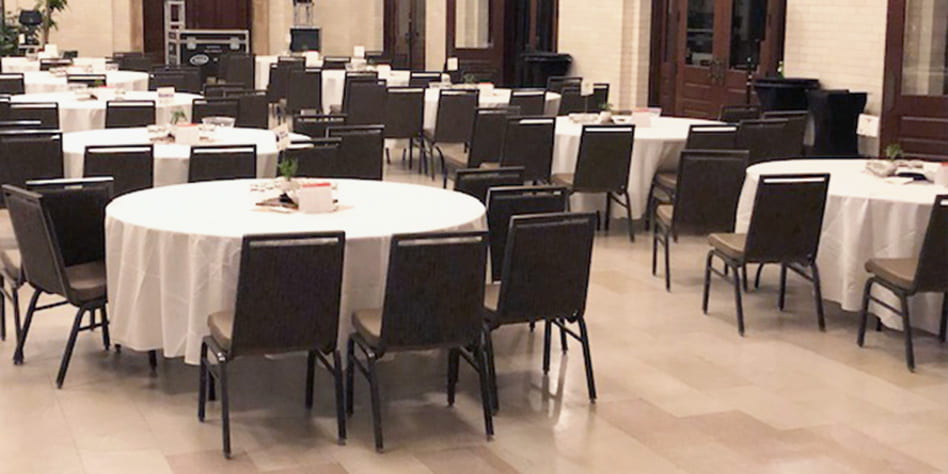
Most venues aim to serve high-volume seated receptions and dinners. Offer both round tables and rectangular banquet tables to maximize options for your clients. If possible, make sure you can accommodate stage presentations with these events. Your furniture needs to move through each phase of the event with versatility and efficiency.
Corporate Events
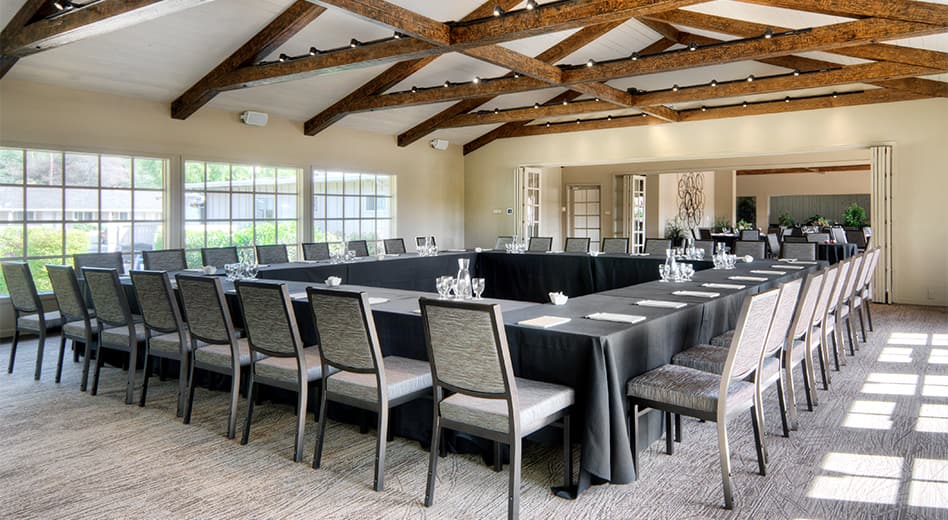
Professional settings require chairs that remain in good condition under daily setups and teardowns, or several reconfigurations in a day. Utilize furniture that supports theater rows, conference configurations, and classroom setups. Avoid worn or mismatched inventory; it reflects poorly on your professionalism.
Graduations
With graduation ceremonies, you must accommodate guest volume, tight timelines, and uniform seating. Lightweight chairs are your best bet. Make sure they stack well and load onto carts for faster setups and takedowns.
Step Three: Evaluate Your Space and Capacity
The different types of events you hold have different requirements for safety, compliance, and comfort. Consider stackable chairs, folding tables, and table and chair carts for flexible layout configurations that can be set with maximum efficiency.
Square Footage per Guest
Plan for 9–10 square feet per person at rectangular tables, 11–12 at round tables, and 6–8 for theater or auditorium-style configurations. This strikes a balance between a space feeling too crowded or too vacant, while taking compliance and safety into consideration.
Table-to-Chair Ratios
Seating 8–10 guests at a round table facilitates pleasant conversation at dinner receptions and social events. Rectangular tables seat 6–8 individuals efficiently for plated service and high-capacity events.
Step Four: Safeguard Your Investment With Commercial-Grade Standards
Choosing durable venue furniture provides a long-term return on your investment.
You must look for:
- Commercial chairs and tables that exceed weight ratings for public assembly use
- Finishes that resist scratching, chipping, and fading
- Stackability – it directly impacts how efficiently your team can reset furniture between events
- Warranties that includes structure, components, frames, and finishes
- Cleanability – your furniture needs to be easy to clean and sanitize without wearing down the finish
Step Five: What Are Your Plans for Storage?
Your furniture decisions must support event turnover. The more flexible your choices, the better they serve you.
Folding vs. Stacking
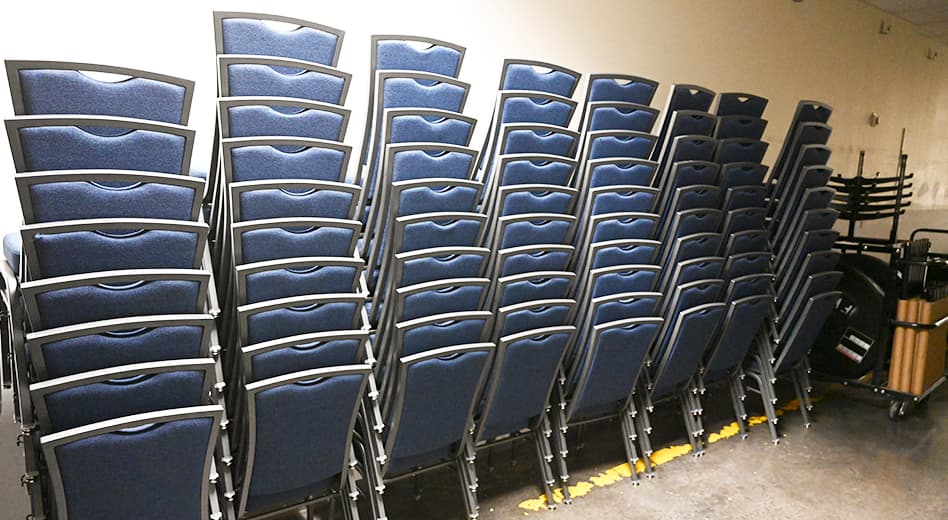
Consider the dimensions of your available storage space, crew size, and the time needed to transition between events. Stacking chairs and folding tables can both help you clear your floor space and provide the versatility you need to manage complex event changes.
Cart Compatibility
Select carts designed for your furniture to help your staff move more pieces in fewer trips, while also helping prevent physical injuries under the time pressure of resets.
Step Six: Fabric and Finish Matters
In a venue environment, fabric and finish selections carry as much operational weight as they do aesthetic value. What looks exceptional on day one needs to perform just as well after hundreds of events. Fabrics should stand up to repeated use with commercial-grade durability, including ratings of 100,000 double rubs or more, and offer stain resistance or bleach-cleanability to handle inevitable spills. Darker tones and textured materials can also help mask wear between cleanings. Tabletop finishes face similar demands. They need to resist moisture, withstand frequent sanitizing, and maintain their appearance over time without fading or discoloration.
Step Seven: Assess Aesthetic Flexibility
Your furniture cannot be ideal for one event and out of place for another. Look for design options that adapt to a broad range of decor.

- Neutral Palettes – adapt to most events’ visual design and client vision.
- Adaptability – works across rustic, modern, formal, and traditional settings without requiring multiple inventory sets.
- Upsell Options – Create opportunities for upgraded finishes, fabrics, or seating styles while increasing per-event revenue.
Step Eight: Determine Budget and Long-Term ROI
The greatest savings rarely come from your initial purchase. Real value shows up over time in how well furniture performs under constant use. Pieces that maintain their structure and appearance year after year reduce the need for repairs and replacements, which helps you avoid added costs and disruptions to your event schedule. Multi-use furniture strengthens that value even further. When one piece works across multiple event types, you reduce inventory needs, save space, and get more out of every investment. Commercial-grade materials and finishes also limit maintenance, helping you avoid refinishing or early replacement.
Furniture choices also impact accessibility and the overall guest experience. This goes beyond basic compliance. Clear pathways, comfortable seating, and easy movement create a space that works for everyone. Durable, well-built furniture also reduces safety risks. When a venue prioritizes accessibility, it not only improves daily operations but also opens the door to more booking opportunities, including corporate and institutional events.
Step Nine: Choosing Venue Furniture by MityLite
As you evaluate your venue’s needs, know that MityLite designs with the highest standards in mind. You don’t have to compromise. You can have it all: beauty, flexibility, safety, durability and an incredible return on your investment.
Explore MityLite’s range of event venue furniture. Our comprehensive guide offers more ideas for setting up your MityLite furniture to accommodate different events.

Ready for a quote?
Chat with a dedicated sales rep today!