To manage a facility and oversee event operations, you have to develop a venue safety plan that addresses risk and meets compliance requirements for your events.
Below, we discuss the importance of event risk management and safety planning. Such as what to include in your venue safety plan, how to manage compliance, and why the right venue furniture is integral to your success.
What Is a Venue Safety Plan?
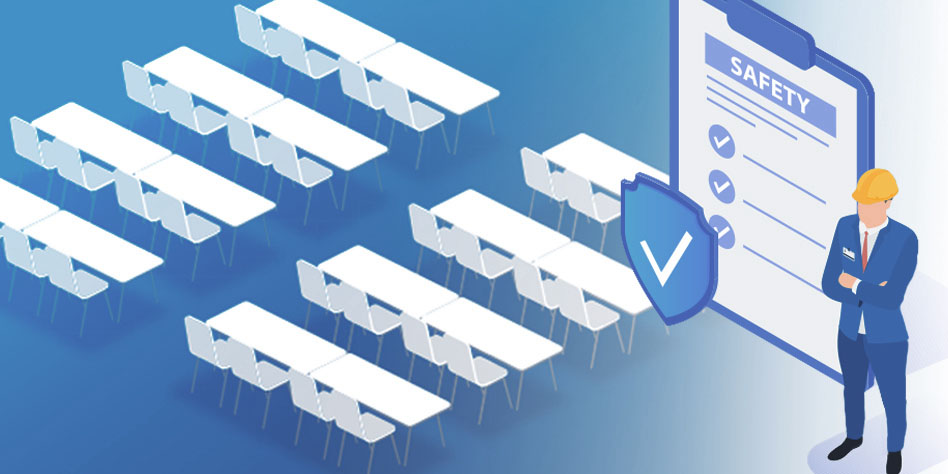
A venue safety plan is a comprehensive strategy for reducing risk and protecting all individuals present at a facility. This includes planning layout designs for the safety of event attendees and staff.
A venue safety plan involves five major elements:
- Risk assessment: Identifying hazards and walking the venue to identify blind spots
- Crowd management: Monitoring crowd density and preventing bottlenecks
- Access control: Making events secure with layered security zones for general admission, VIP, and back-of-house
- Emergency preparation: Preparing evacuation procedures, medical response, and coordination with first responders
- Health and wellness: Following ADA compliance and infectious disease protocols, and providing proper hydration
Why Are Furniture Options Important in Event Planning and Safety?
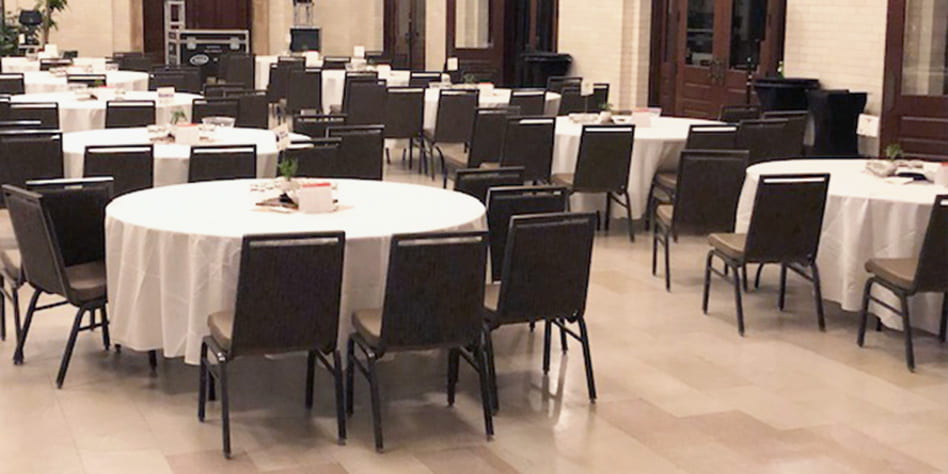
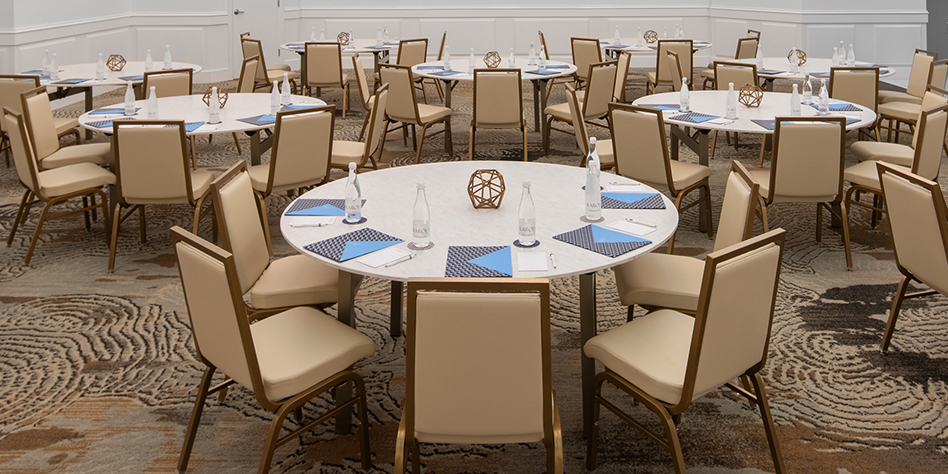
Every table and chair in your space affects traffic flow, emergency access, and crowd density.
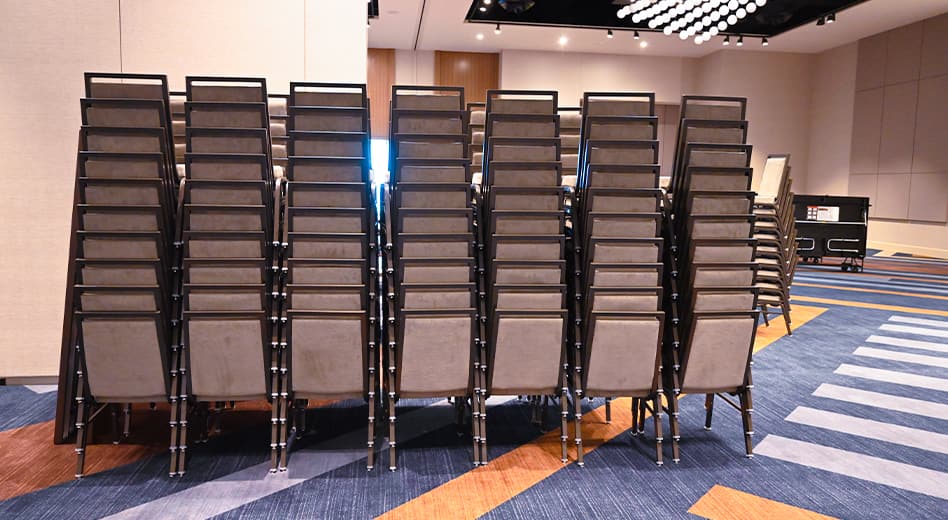
Choosing the right furniture helps you effectively manage an emergency when it occurs. For instance, stackable chairs with a rolling cart let you clear a room quickly during an evacuation.
8 Key Components of a Venue Safety Plan
The following are eight core elements of an effective safety plan, revealing how foundational the right furniture decisions are for your success.
1. Risk Assessment and Venue Layout
Creating your venue safety plan starts with a thorough risk assessment. You will identify potential hazards with AV and electrical systems, uneven flooring, crowd capacity concerns, and anything that needs to be addressed.
You will map those hazards against the venue layout, looking for places where crowd movement slows, sightlines are broken, or emergency access could get blocked. Walk the space before every event to evaluate high-traffic areas, including entrances, bars, buffet stations, and any points that require clearance.
2. Furniture Placement
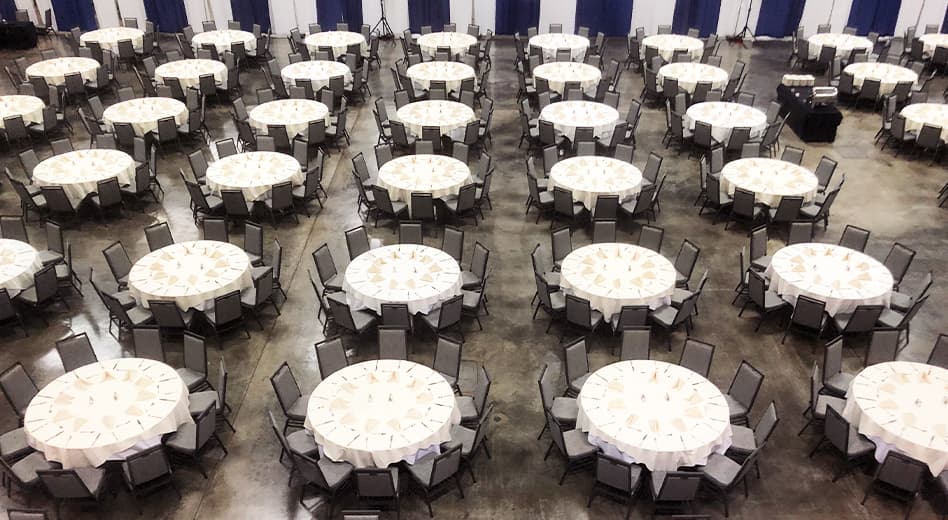
According to the International Business Code (IBC), assembly spaces with tables and chairs are calculated at 15 net square feet per person, including chair clearance.
You’ll want to be certain your furniture placement allows for the ADA-required continuous aisle clearance of 36 inches. The standard for permanent access ways also applies to aisles created by your furniture arrangement.
Events should be monitored to make sure guests don’t rearrange chairs or tables that become obstacles or compliance issues.
Furniture with non-slip feet or glides can help limit unintended movement, while proper planning helps reduce drift around fixed landmarks that become problematic.
3. Emergency Response Plan (ERP)
Your emergency response plan accounts for fire, medical, and evacuation procedures. This includes having properly maintained fire extinguishers and alarms, and training staff to manage emergencies. Your venue safety plan will include primary and secondary evacuation routes marked with no-furniture zones.
Lightweight, stackable seating with rolling carts works well for emergencies that require quickly clearing escape routes. Table positioning for aisle clearance accounts for first responder access in a medical emergency.
4. Security and Crowd Management
In your event safety plans, consider all event entry and exit points and traffic flow, and plan your furniture layout to support proper crowd flow.
For instance, you can use rectangular tables at entry points as a check-in station, and create a serpentine path to control crowd density at a heavily crowded event.
Establish back-of-house space for staff, performers, and VIPs that are no-block zones. It’s essential to properly mark this with signage so guests don’t simply gather in the empty area.
5. Staff Training and Communication
A well-designed floor plan is only effective when paired with a well-trained staff. Training should cover furniture placement, layout management, and emergency protocols—so every team member understands not just where things go, but why it matters. Your staff’s diligence and careful attention to detail are foundational to event venue safety.
Aisles must stay clear, and that standard requires active enforcement. Train staff to watch for chairs that have drifted into emergency paths and correct them immediately as part of their normal routine.
For venues hosting multiple events, documented reset protocols are essential. Creating a map of furniture in relation to walls, columns, and other structural anchors reinforces your ability to remain code-compliant from one event to the next.
For larger or more complex events, assign a dedicated floor lead to monitor layout integrity throughout. Their role is to recognize developing hazards, communicate quickly via radio or mobile device, and coordinate staff before a small drift becomes a safety issue.
6. Hygiene
The furniture you select for your venue directly impacts how you manage hygiene. Choose materials that can be wiped down and disinfected quickly. Linenless tables are the most practical for venues that host frequent event changes.
MityLite offers collections like Reveal, Madera, and Elevare, which are designed with premium finishes that are easy to clean, don’t require fabric coverings, and never compromise on appearance.
7. Accessibility
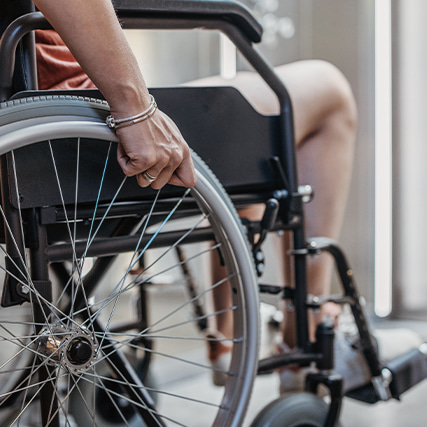
ADA compliance requires at least 5% of seating spaces at dining surfaces to meet accessibility requirements.
Compliance includes providing:
- 30 inches by 48 inches of clear floor space for wheelchair approach (305.3)
- At least 28 inches of knee clearance height and 34 inches maximum (902.3)
- At least 30 inches of clearance width under tables (306.3.5)
As part of your furniture considerations, avoid pedestal base tables that can’t meet these requirements.
Consider accessibility compliance across the entire venue with the same attention to detail, from aisle clearance to restrooms, bars, service areas, and exits.
8. Documentation and Coordination
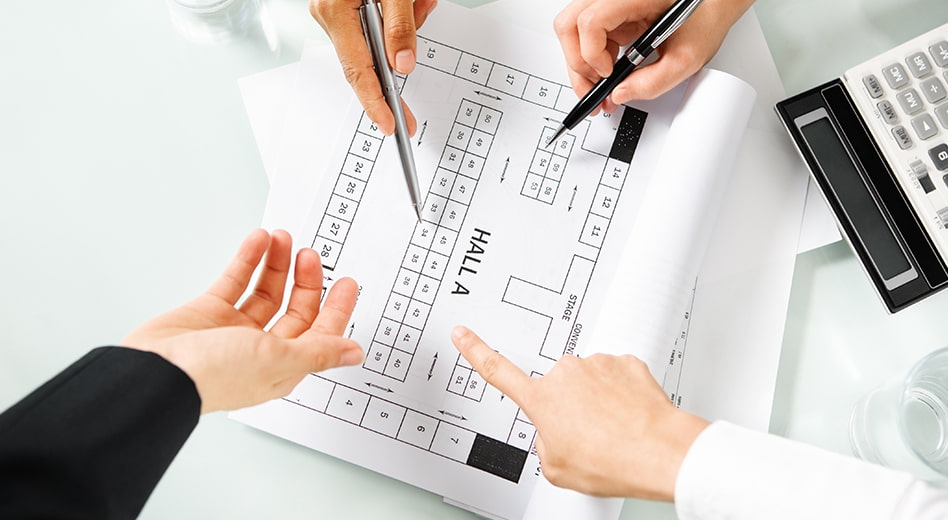
Your furniture layout is a detailed floor plan with exact placements measured from fixed landmarks, providing your entire team with a reliable reference for setup, resets, and compliance.
Clearly mark emergency exits, aisle widths, accessible routes, table locations, and first-aid stations.
Share documentation with stakeholders, like AV, security, and permitting authorities. This provides clear, shared visibility for sightlines, egress documentation, and emergency access.
Venue Safety Planning At-A-Glance
Follow these steps to build and maintain a venue safety plan that holds up before, during, and after every event:
Consider the following steps as a working template to incorporate venue safety into your event planning process:
- Conduct a risk assessment to identify technical, environmental, and crowd-related issues.
- Map table and chair placement with actual measurements using fixed landmarks.
- Validate egress and flow, including no-furniture zones, evacuation routes, and aisle widths.
- Assign zones for check-ins, dining, staging, medical needs, and back-of-house.
- Train staff for emergency preparedness, furniture placement, and reset procedures.
- Build security, crowd management, and emergency response policies.
- Monitor events yourself or assign a floor lead.
- After each event, make note of any issues with furniture being moved or compliance issues to improve upon
Turn to MityLite for Your Venue Furniture Solutions
MityLite provides durable, commercial furniture choices designed with safety, reliability, and the challenges of event planning in mind.

Got questions?
Talk to us about your specific venue needs today.
Products Featured in This Article

Reveal Linenless Duo Table
5 Table Sizes, 2 Table Leg Styles

Reveal Linenless Fixed Width Folding Table
9 Table Sizes, 2 Table Leg Styles
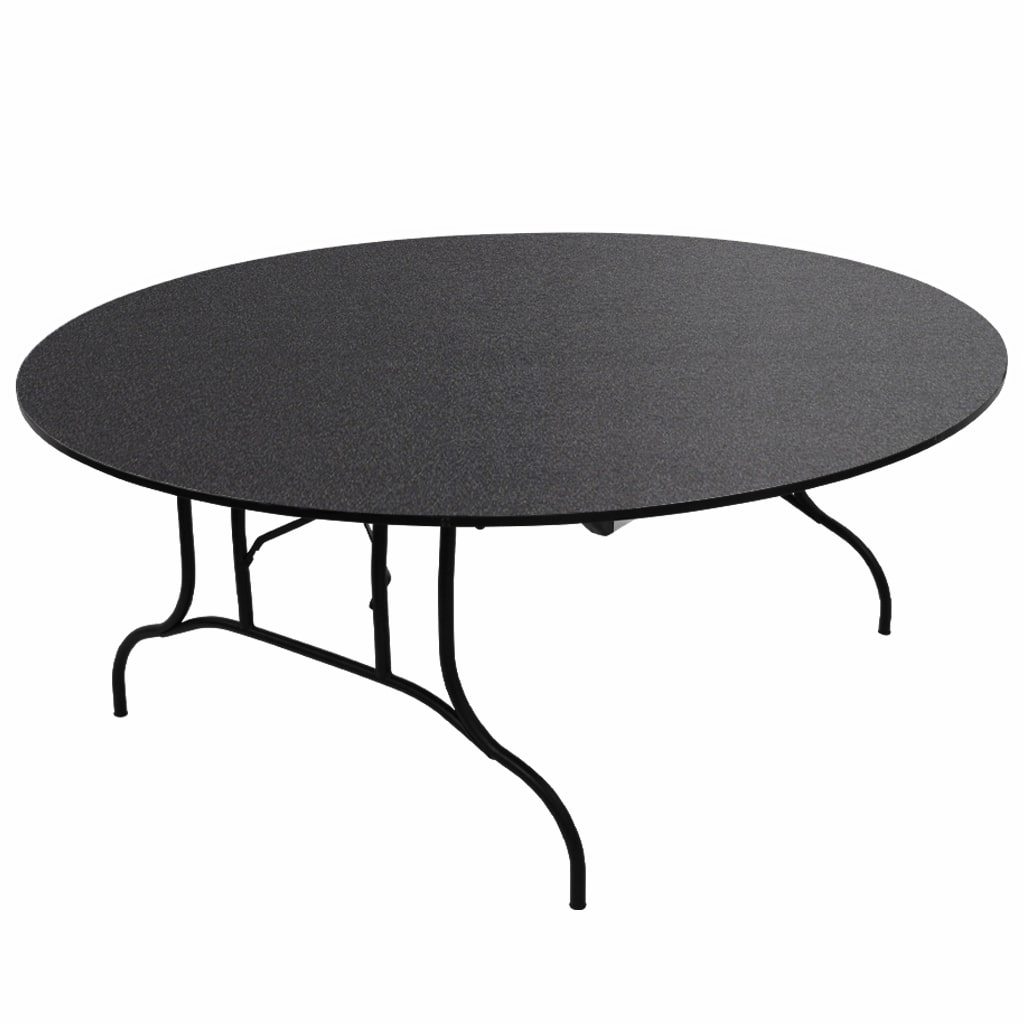
Madera Pro Round Table
3 Table Sizes
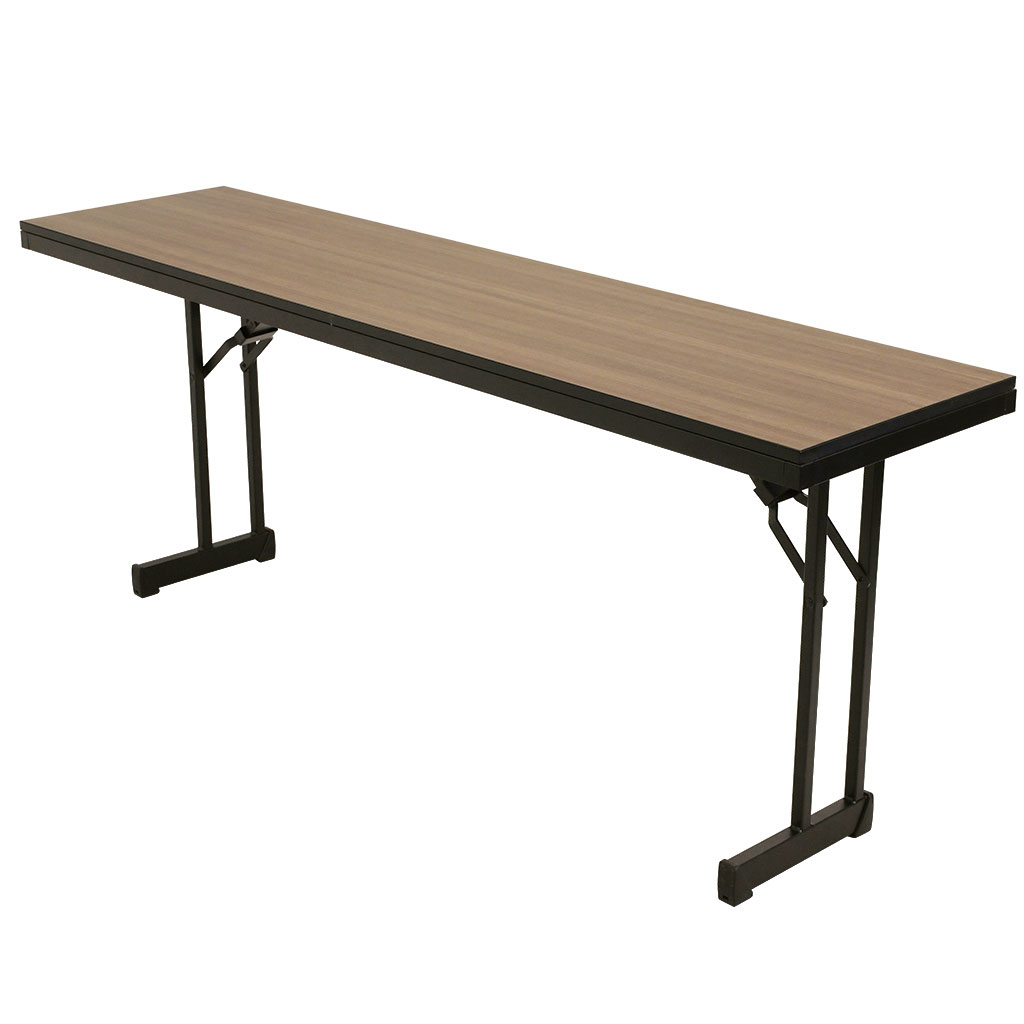
Madera MAX Rectangle Table
6 Table Sizes

Elevare Linenless Cocktail Table
4 Table Sizes, 3 Table Heights

Elevare Display Table
2 Table Sizes, 3 Table Heights