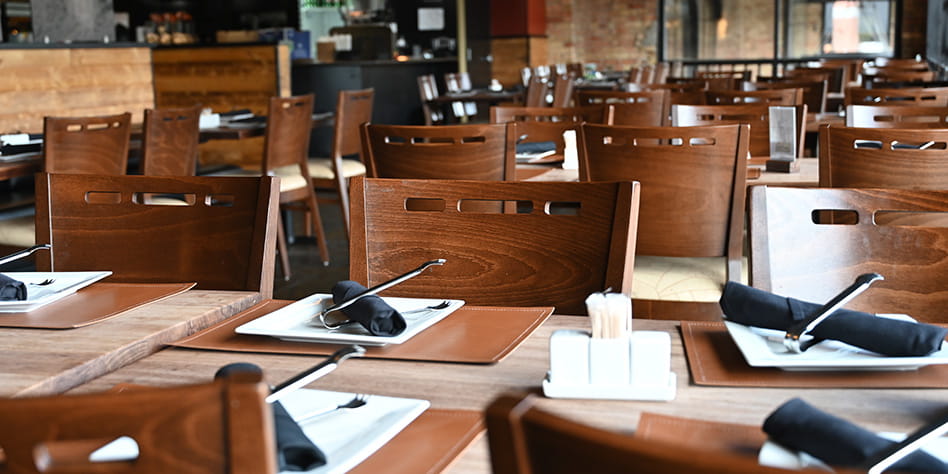
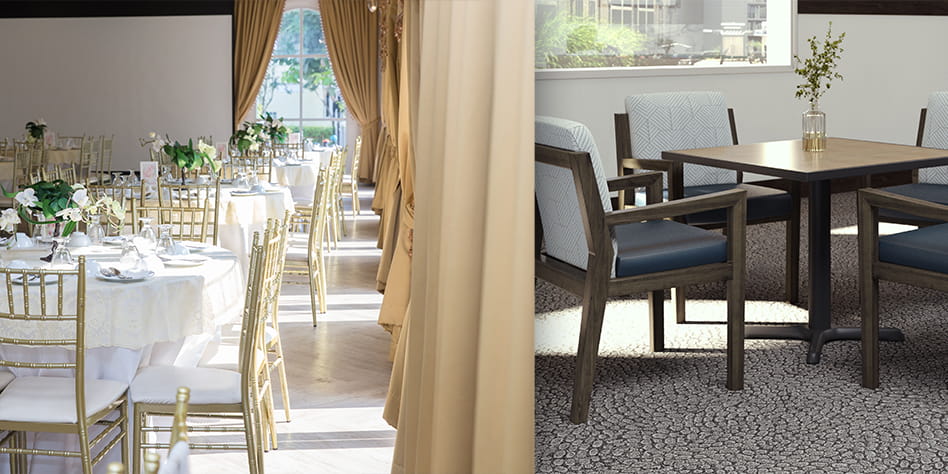
The way you design your small restaurant’s seating is central to the atmosphere you provide for customers. Every decision, from chair materials and table finishes to layout and spacing, communicates your brand’s identity.
Rustic elements signal warmth and craftsmanship. Sleek furniture styles and materials convey modern energy. Welcoming upholstery promises customers comfort and intimacy.
These seating and design choices shape whether guests perceive your space as casual or upscale, energetic or cozy, and as a result, this perception drives customer behavior.
Below, we provide unique seating ideas for small restaurants, discussing why every seating decision matters, and offering tips and layout ideas to get the most from your space, while providing the dining experience your guests deserve.
Why Every Seat Matters
With limited square footage, every seating decision must maximize comfort, design intent, and capacity. All it takes is a single poorly placed table to disrupt the entire traffic flow.
For many small restaurants, the seating layout needs to prioritize privacy and comfort, so guests enjoy the atmosphere and return with friends. For other establishments, designing for fast-paced efficiency caters to customers who are on the go, encouraging a fast turnover rate as a strategy for success.
Smaller-sized restaurants operate on thin margins, so every seated guest contributes to the revenue. At the same time, cramped conditions can ruin your guests’ experience and complicate how staff navigate the floor. This is why seating decisions are about so much more than just maximizing your space.
Core Layout Principles for Small Restaurant Success
Effective restaurant seating starts with understanding your space. Most small restaurants measure around 800–1,500 square feet, so you’ll want to balance capacity with privacy.
Three main factors determine whether your layout sets you up for success:
- Revenue potential
- Operational efficiency
- Customer satisfaction
The perfect floor plan amplifies the benefits of all three.
The balancing act of successful small restaurant layout planning is generating sufficient revenue per square foot while still providing the comfort, space, and aesthetics your guests desire. Equally important is the flow of spacing between sections and tables. You need to plan sufficient space around tables for servers and bussers to take care of guests without interrupting guests to ask them to move or scoot in their chairs. Having good traffic flow throughout your restaurant allows your staff to perform at their top efficiency.
Indoor Seating Strategies That Maximize Your Floor Space
Getting the most from your indoor space requires strategic positioning of tables, chairs, and booths. It’s important to maintain good traffic flow and build flexibility into your design.
Strategic Positioning: Walls, Lanes, and Flow
You can take advantage of the perimeter walls in your space to install fixed seating, like banquettes and booths. Banquettes have a bench on one side of the table and chairs on the other, which allows flexibility for guests using wheelchairs and highchairs. Booths typically have bench seating on both sides of the table and often have high backs to give an additional feeling of privacy. These types of seating restrict the flow of traffic to one side of the table, which can help you fit in more tables while still providing a cozy atmosphere. Booths and banquets also leave the central floor space open for flexible arrangements.
Wall-mounted seating can make use of otherwise awkward, narrow spaces, increasing capacity without crowding the room.
Create clear, straight traffic lanes of 24–30 inches between seating areas for smooth service flow. Getting the most out of your space includes providing speedy service. Thoughtful traffic areas help staff turn tables quickly, which in turn enhances the guest experience.
Space-Maximizing Furniture Solutions
Counter seating along windows helps you leverage every inch of space. Commercial barstools typically require only 18–24 inches of depth, but they deliver prime real estate. By arranging counter areas so guests can watch bustling street life outside or focus on the action in the kitchen, solo diners feel entertained and encourage regular visits.
Communal tables are the secret weapon of space-strapped cafes and casual dining restaurants. They fit the same footprint as a four-top but seat 6 to 8 guests, and they encourage speedier turnovers than slower, intimate dining.
Flexible Seating for Variable Capacity
Choose sturdy, stackable chairs designed for commercial use, so you can expand your capacity during rush periods, then clear floor space when things quiet down.
Treat two-top tables as fundamental building blocks, providing a private dining experience for couples, or pairing them together for larger parties. Easy reconfiguration means you’re never locked into one seating arrangement.
Need Inspiration for Your Restaurant Space?
Explore our free Restaurant & Fine Dining Lookbook. Discover curated furniture designed to keep your guests coming back.
Outdoor Seating: Extending Your Dining Room
Apply indoor layout principles to outdoor spaces, but account for weather protection and seasonal flexibility. Treat guests to scenic views and natural light while choosing furniture that adapts to conditions.
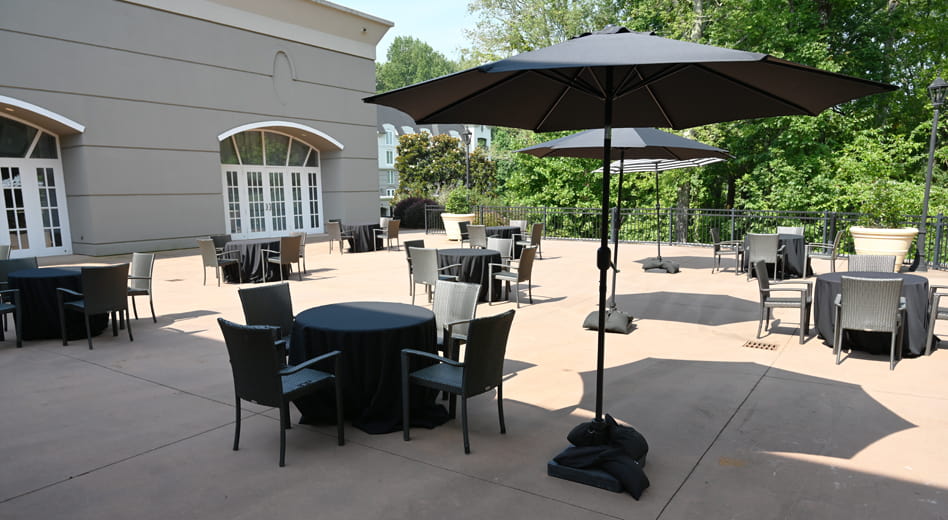
To maximize outdoor dining space, place bistro-style tables (which are smaller tables that generally seat 2 to 4 guests) along patio perimeters. Then add one or two larger outdoor dining tables for big parties in the center of the patio. This arrangement uses less space while creating an energetic café atmosphere.
Invest in adaptable furniture, like weather-friendly stackable chairs and durable outdoor tables, so you won’t have to worry about furniture during inclement weather. Choose materials engineered to withstand temperature fluctuations and UV exposure.
Weather-Ready Small Restaurant Patio Ideas
Design outdoor spaces with weather protection in mind. Choose materials that last and furniture that’s easy to clean, move, and store after service.
Retractable awnings, roll-down screens, and portable heaters extend your outdoor season while independently catering to individual diner preferences in lighting and temperature.
Strategically placed umbrellas, pergolas, and covered seating options make it easier to be ready for any request.
To optimize tight patio spaces, opt for small, round or square bistro tables. When paired with the right chairs, these tables have a smaller footprint and be placed more closely together without making guests feel cramped. Modular outdoor seating systems provide options for different services, from bistro tables in the morning to larger settings for evening dinner parties.
Visual Seating Designs to Expand Small Spaces
Perception matters as much as your actual square footage. Strategic sight lines, lighting choices, and furniture placement make tight spaces feel open and inviting.
Creating Visual Depth and Flow
Place your largest seating areas away from the entrance to draw customers deeper into the space. This builds atmosphere into a theatrical sense of discovery and prevents guests from feeling cramped when they walk in.
Use mirrors strategically to create a depth illusion for carefully arranged seating areas. Placing mirrors opposite windows or light sources can visually double your space and amplify both natural and artificial light.
Create diagonal sight lines instead of straight corridors by angling furniture to guide the line of sight through curved paths—spaces feel significantly larger when viewed along diagonals rather than straight lines.
Lighting Strategies for a Spacious Atmosphere
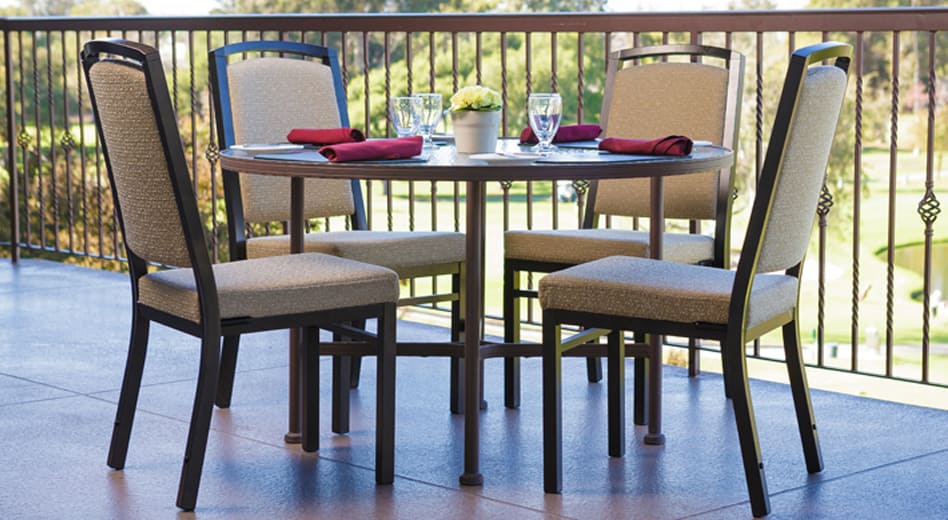
To avoid a cramped feeling, use color and light to create a feeling of space in your dining area. Choose light-colored furniture and finishes to reflect light throughout your space. Blonde woods, light metals, and bright upholstery fabrics create an airy atmosphere that feels more spacious.
If your dining room has a lot of natural light, don’t shy away from positioning tables near windows, but add adjustable window treatments to prevent glare during different times of the day. If your dining area doesn’t have much natural lighting, get creative with the types of artificial lighting. Layer multiple types of lighting, using pendant lights and table lamps to create pools of warm light. This creates a more visually expansive atmosphere than uniform overhead fixtures.
During the evening, dim some of the lights and place glowing votive candles (real or artificial) on tables to instantly create cozy, flattering light for your guests.
Outdoor Spaces as Visual Extensions
You can visually expand the perceived size of your dining area by designing the transition between indoor and outdoor seating areas. Incorporate elements of the indoor design into the outdoor area (or vice versa). This can be done by using consistent flooring, color schemes, and furniture styles in your indoor and outdoor spaces.
Consider using elements like French doors or sliding glass walls that can be left open to the patio in good weather. This creates a visually seamless transition to outside dining areas. A smooth transition to the patio dining area will help make small restaurants feel larger.
Balancing Efficiency and Comfort for Maximum Revenue
Getting maximum returns on your square footage requires a careful measure of table turnover rates and guest satisfaction.
Strategic Revenue Optimization
You can design unique seating spaces around peak hours to match your service style and price points. For instance, fine dining encourages lingering diners, while casual concepts rely on faster turnaround times.
You can also choose to position prime locations—like window seats, corner booths, tables with a view, and patio tables—to appeal to higher-paying guests, requiring reservations or a minimum number of diners.
Indoor Flexibility and Service Flow
In a busy restaurant, table sizes and room setups often change throughout the day. You can build flexibility into your floor plan with lightweight, movable furniture that is easy for your staff to reconfigure. This lets you maximize revenue on everything from morning coffee service to evening dinner settings.
By carefully considering seating areas and easily navigable traffic areas, you empower your servers to efficiently care for guests. Efficiency allows servers to prioritize attentive service, which leads to positive reviews and returning diners.
Outdoor Efficiency and Weather Planning
When designing your outdoor patio dining, it’s important to plan for every type of weather. Retractable awnings, roll-down screens, and portable heaters let you adapt to seasonal changes. Adding umbrellas to tables can minimize the inconvenience of a few drops of rain or an unusually hot day and keep diners happy.
If you live in a climate with heavy snowfall in winter, consider purchasing patio furniture covers or storing furniture indoors to protect it from the weather and prolong its lifespan. By planning for every type of weather, you will not only protect your investment, but you will also make it easier to serve individual customer requests for different temperature and lighting conditions.
Transform Your Space with MityLite
Successful restaurant operations maximize every square foot to provide memorable dining experiences. Your furniture and seating choices can transform limited space into a thoughtfully crafted, competitive advantage.
MityLite’s restaurant furniture collection features dining chairs, barstools, and weather-resistant outdoor pieces designed for high-traffic dining environments.
Our lightweight folding tables, linenless banquet tables, stacking chairs, and cocktail tables are manufactured to simplify the process of small restaurant design.

Unlock your small restaurant’s seating potential
Contact our restaurant furniture specialists to discuss custom solutions for your unique space challenges.