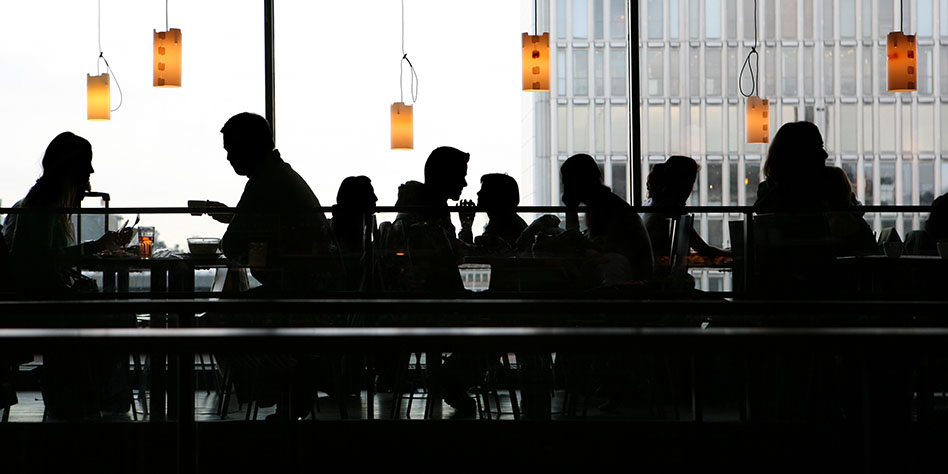
When it comes to designing a restaurant, there are three things that add up to repeat business: atmosphere, great food, and cleanliness. Creating an atmosphere that attracts guests requires having good furniture and a pleasing layout. Exploring creative restaurant seating layout is both a practical necessity and an art form that can transform your restaurant into a must-try spot that people can’t wait to return to.
With a few restaurant seating layout tips, you can leave customers more satisfied with your service and earn more revenue per square foot. We’ll explore 5 layout essentials so you can craft a welcoming atmosphere and a smooth workflow.
5 Popular Seating Layout Styles for Restaurants
From different crowds to different tastes, it can be tricky to satisfy all your customers with your seating layouts. There are five classic restaurant layout styles that restaurant owners regularly use, and examples to give you inspiration.
It’s important to note that driving more profit depends heavily on your establishment’s niche, location, and foot traffic. A seating layout that works great for one business may not be compatible with another.
1. Basic Table Seating
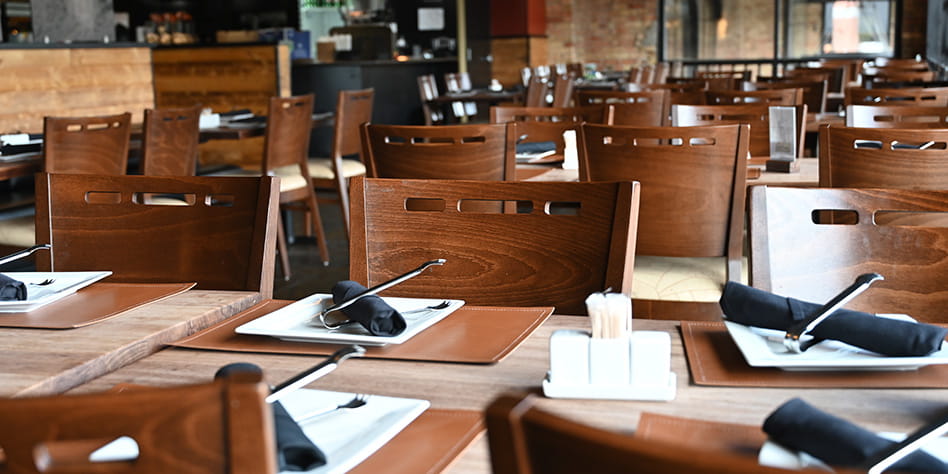
Despite the popularity of booths, bar tables, and other trendy seating options, most restaurants have some space on their dining floor reserved for standard tables and chairs. This could include tables of varying sizes and shapes. Basic tables and chair layouts offer a classic dining experience for customers and plenty of versatility for restaurant owners. You can easily add or remove chairs, push tables together, or pull them apart, depending on the needs of each party of guests.
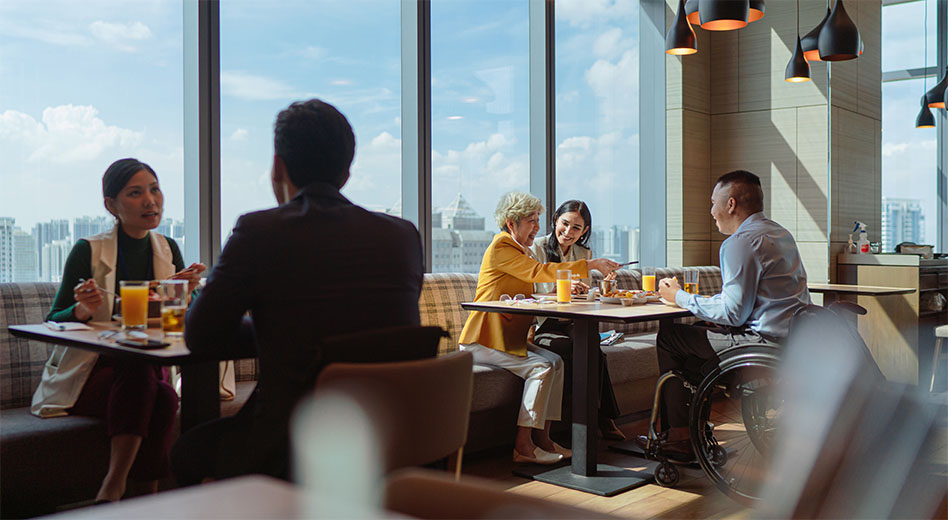
Seating floor plans that include tables and chairs are usually ADA-friendly, since a chair can be removed to make space for a wheelchair or other mobility device.
Examples
Basic table seating is popular at all types of restaurants, cafes, and bars. Lightweight tables can be combined to make longer tables or pulled apart to make several smaller tables.
2. Banquette or Booths
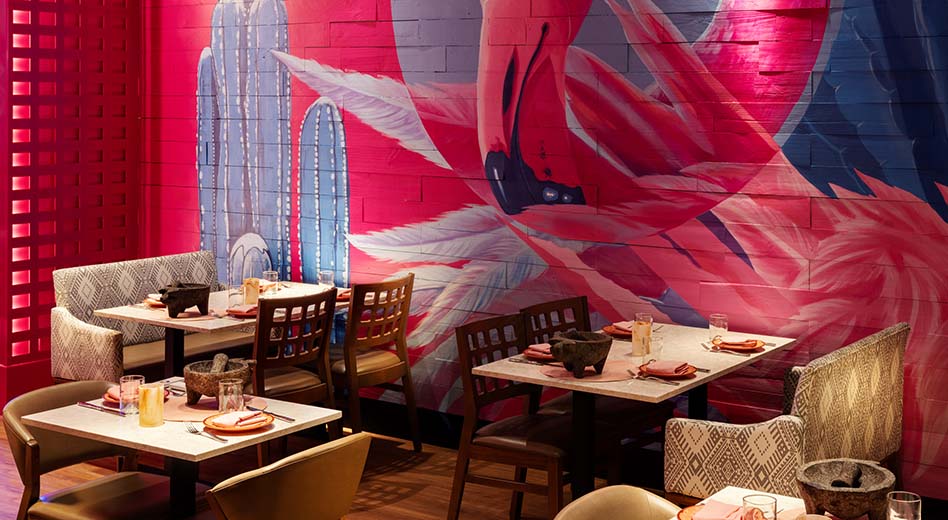
This stylish restaurant seating layout is popular at many types of informal restaurants. A long bench seat with a backrest hugs a back wall, and then various tables are placed in front of the bench. The bench seat offers seating on one side of the table, while chairs on the other side of the table offer additional seating. This allows guests to choose their seat preference.
A row of booths can be located in the center of the room or along the walls. Corner booth seats are often coveted spots for groups dining together. While any group may gravitate to a banquette, this layout is particularly popular for friend groups, date nights, and co-worker hangouts. Bear in mind that booth seating does not meet the needs of many individuals with mobility challenges, and booths are (usually) not ADA-compliant. To meet ADA requirements, you can mix booths with traditional tables and chairs or opt for banquette seating that offers a place for chairs to be removed to make way for wheelchairs.
Examples
Booths and banquette seating styles can help maximize seating space because they are so compact. Although guests will need to slide into the seat, they won’t need space on all sides of the table to pull chairs out. Booths and banquettes can help divide a large room, be tucked away on the side of the room, or be placed in corners to give customers a little more privacy. Even when placed in the center of the room, booths give more privacy and a greater sense of coziness than open tables and chairs.
3. Long Communal Tables
Long communal tables are a classic restaurant seating layout that suits high-traffic businesses and keeps service moving quickly. This layout can encourage social dining, ideal for busy hours in casual concepts.
Examples
Does your establishment have high foot traffic that regularly attracts larger parties? Try adding long communal tables that make it easy for customers to enjoy dinner with a group.
4. High Tops or Cocktail Tables & Barstools
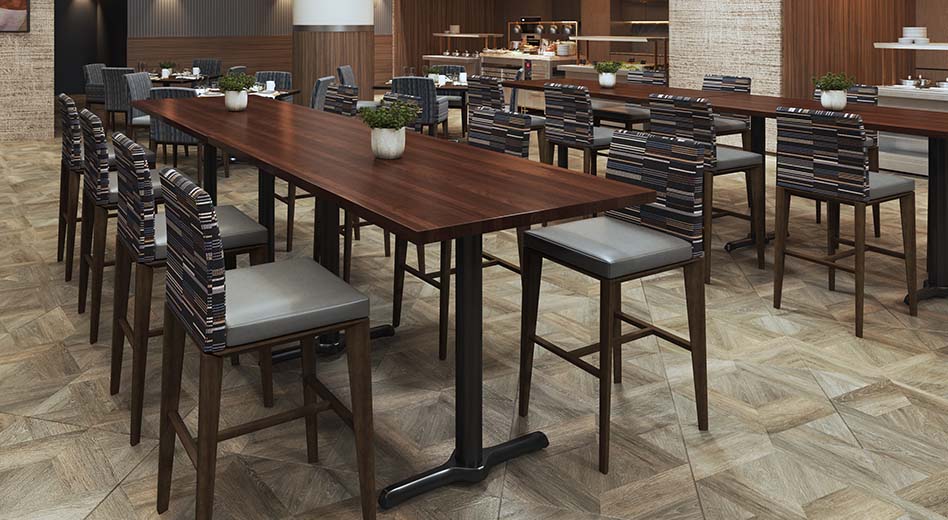
These hip-high table options pack quite a punch for the customers who want to enjoy a nice drink and some good company. You can customize the table bases with the tabletop of your choice, then add barstools for a cool vibe.
Examples
If your establishment has limited space, a cocktail table doesn’t take up too much room while still giving customers what they want. If you place the table near a great view or TV, even better.
5. Mixed layouts
Sometimes you need more than one option to make everyone happy. If you receive a diverse clientele, it’s best to lean toward a mixed layout so you can satisfy everyone’s preferences. A mixed seating layout utilizes two or more seating styles. This can help you seat more people comfortably than a single style. It can also be more aesthetically pleasing and visually interesting than a uniform layout.
Examples
The sky’s the limit with mixed layouts. For starters, you can have a few open table layouts for larger groups, then add a banquette along a side wall or booths for customers who want more personal space.
5 Key Factors to Consider in Seating Design
Your restaurant seating layout can make or break your next customers’ experience. The key factors to consider include visual style, ADA compliance, adaptable layouts, and getting the most value out of your space.
Visual Style
What style do you want your restaurant to have? Whether you are going for a warm, rustic look or prefer sleek minimalism, make sure your chairs and tables blend neatly with the decor.
We offer custom tabletops with multiple finishes and colors so you can easily find tables that fit right in with your restaurant’s ambiance.
Customizable Layouts
Does your restaurant regularly host special events like birthdays, anniversaries, or business lunches? If chosen wisely, your seating design can allow you to add extra tables or chairs for large events. This allows you to customize seating space to the level of traffic at your restaurant. In some parts of your floorplan, you can create a quiet and cozy dining experience for guests, while other areas are reserved for creating lively settings for big social gatherings.
However, if you have too many tables and chairs, or if your usual restaurant seating layout is too cramped, it can create a bad customer experience. Instead of enhancing revenue by attracting more diners, it might drive them away.
Stacking side chairs allow you to quickly expand or tidy up floor space in a jiffy. You can also explore options like patio dining to expand available dining areas in a cost-effective way.

Peak Hours and Slow Hours
Similar to the previous section, you may also need to tweak your seating arrangements to accommodate surprise spikes or drops in activity. When designing your seating layouts, consider how easy it will be to add or remove tables and chairs at a moment’s notice.
Certain layouts are well-suited to flexibility. For example, you can easily squeeze in an extra cocktail table when you notice a spike in foot traffic or add another chair to an open table layout.
ADA Compliance
ADA regulations ensure restaurants are accessible to Americans with disabilities. When it comes to seating and tables, you need to adhere to several rules.
- At least 5% of your seating needs to be ADA-compliant.
- ADA-compliant chairs and tables need to be movable (not fixed to the floor) to accommodate customers with wheelchairs.
- These tables should be no more than 34 inches high and have at least 27 inches between the tabletop and the floor.
- Your seating area should have a clear area between 30 and 48 inches for wheelchair movement.
Maximizing Your Space
Restaurant seating layouts are far more versatile than they seem at a glance. You’d be surprised by how much of your space can be maximized when you critically look at your indoor and outdoor designs.
How much furniture can you reasonably shuffle around to create more floor space for restaurant chairs? Have you considered a new paint job or new lighting to create the impression of more space? Strategic solutions may be all that’s standing between you and getting more value out of your current space.
How Seating Affects Customer Experience
Ideally, your restaurant seating layout should be seamless, where your customers don’t even need to think about it. When they’re able to quickly choose or be seated in an area that suits their personality and group size, you’ve already done half the work of creating a great experience.
Ambiance
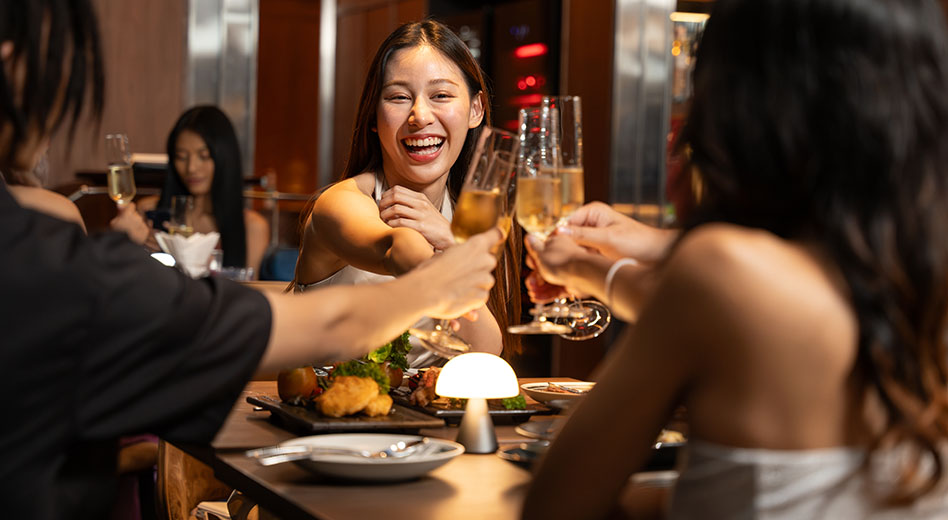
When people eat at a restaurant, the food is only one aspect of their experience. They want a vibrant atmosphere that helps them make memories or enjoy a reprieve from everyday life.
When you take the time to craft smart, practical seating arrangements, you are creating environments where it’s easy for staff to take care of customers’ needs and customers feel cared for. Even a simple change in your chair fabrics can completely transform your room’s look and feel.
Comfort
Customers who don’t feel comfortable aren’t going to stick around for a long visit or return with friends. A diverse selection of seating makes it easy for them to find what suits them best, whether it’s a cushioned banquette or booth, or a lively open table.
Acoustics
Every restaurant has a different ambience, and that includes the sounds guests hear around your dining area. Your restaurant seating layout will impact the noise customers hear while dining. For example, banquettes tend to be more insulated and quieter than standard tables and hard chairs. Spreading tables out further and dimming the lights can help make it quieter, as can using upholstered chairs and booths, rugs, curtains, and other soft furnishings, as they absorb sound.
Traffic Flow
Your seating layout needs to consider your employees’ ability to work and your customers’ ease of movement. Clear service pathways are vital to ensure customers get their orders on time and workers don’t have to worry about bumping into anything.
How MityLite Helps Restaurants Satisfy More Customers
Durable, flexible seating can help you ensure your restaurant can accommodate repeat traffic all year long. No matter how your menu offerings evolve, our tables and chairs will adapt with you.
MityLite has been crafting sleek, long-lasting restaurant furniture since 1987. Enjoy stylish designs and tested durability to get the custom dining furniture you need to keep customers coming back for more.
Does your restaurant seating layout need a makeover? Check out our commercial restaurant furniture for a personalized quote and see how an improved seating layout creates a better dining experience for your customers.

Ready for a quote?
Chat with a dedicated sales rep today!