In hospitality environments, furniture wears down faster than expected. Lesser-quality chairs lose their stability under constant movement. Cheap finishes show their true colors when the sealants wear down and don’t hold up to daily cleaning. When a thrifty client rejects the initial cost of quality wood or metal furniture, they pay a hefty price.
You’ve seen this scenario play out with your clients:
An eager business owner cuts the ribbon in front of his new restaurant and smiles at the turnout from the community. They applaud his perfectly matching chairs and tables. The ambiance promises a soothing retreat. When you walk in his front door, the room feels complete.
Sadly, over time, the good-design-on-paper unravels. The seemingly sturdy tables begin to wobble, and customers must slide coasters under the bases to steady them. The bold fabric color fades. The joints in the furniture shed their screws, and have more give than they should. You advise the owner to swap out the unsteady chairs with substitutes, but they don’t quite match the rest.
These unfortunate clients face an endless cycle of small fixes and ongoing replacements. For you, the space evolves into one that no longer reflects your original vision. You question whether the furniture failure was not just a design issue. Maybe it was the materials used.
Hospitality Furniture Lives a Hard Life
Furniture in hospitality spaces never sits still for long. It moves through every service and every reset. Guests shift in their seats. Staff reconfigure layouts and wipe down surfaces throughout the day. What looks solid in a showroom does not always hold up under such strain.
That constant use exposes weaknesses quickly.
Wood and Metal Furniture Do Different Jobs
Wood and metal both have a place in hospitality spaces, and for good reason. Each one brings different strengths to the table (pun intended). Instead of asking which material is better, ask where each one performs best.
Wood Furniture
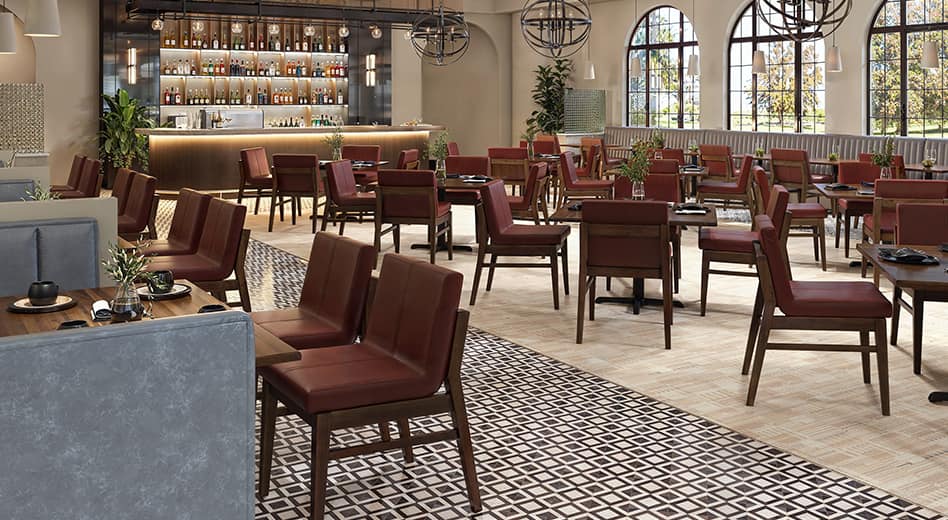
Wood works well in dining areas and adds to the atmosphere. It supports the overall experience and helps define the space.
Beyond its visual impact, wood brings several practical benefits:
- Repairable and Refinishable
When surfaces scratch or wear down, your client can sand and refinish them instead of replacing the entire piece. With constant wear, that superpower extends the lifespan significantly. - Ages Well
Small marks and wear blend into the material, especially with the right finish. Instead of looking damaged, high-quality wood develops character over time. That comfortable, lived-in look feels inviting in hospitality environments. - Strong Joinery (When Designed Properly)
Well-constructed wood furniture uses joinery that handles years of movement, shifting weight, and daily service without failing. The key is quality construction, not just the material itself. - Warmer Guest Experience
Wood changes the feel of a room. It absorbs sound better than metal, reduces noise, and creates a more comfortable, grounded environment. Quality craftsmanship shows and guests respond to it. - Easier to Maintain Consistency Over Time
When you need to refresh or repair wood furniture, you can match finishes and maintain a consistent look. With other materials, damage often leads to full replacement, which creates a patchwork of disjointed old and new pieces. - Long-Term Cost Efficiency
Wood may cost more upfront, but it often costs less over time. As you repair, refinish, and extend its life, you avoid the cycle of frequent replacement. That reduces both direct costs and operational disruption.
Metal Furniture
Metal often makes the most sense in high-turnover areas, where flexibility and durability must keep up with movement and frequent use.
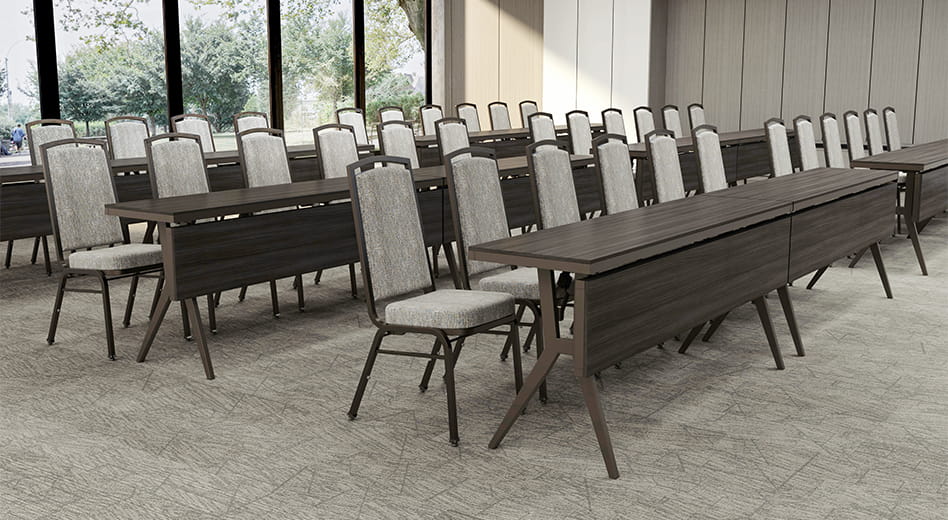
The functional advantages are hard to ignore:
- Built for High Traffic
Metal handles movement better than most materials. Chairs slide, stack, and shift all day. Metal frames resist many of the small impacts that loosen or weaken other materials over time. - Structural Strength and Stability
Metal provides a solid foundation. When engineered well, metal frames hold their shape under repeated use. They resist warping and maintain stability, which helps prevent wobbling and uneven wear. - Lower Day-to-Day Maintenance
Metal surfaces are generally easy to clean and maintain. They hold up well against frequent wiping and exposure to cleaning products. In fast-paced environments, that simplicity supports your staff and keeps operations moving. - Performs Well in Flexible Layouts
If your space changes often, metal might be your best bet. Restaurants that reconfigure seating for events, large parties, or different service styles benefit from furniture that moves frequently without taking a toll. - Consistent Appearance Over Time
Metal tends to maintain a uniform look. While other finishes wear, metal does not show the same variations as wood. This helps keep a space looking consistent, especially in high-use zones. - Strong Choice for Specific Areas
Metal often works best in bar and counter seating, high-traffic dining areas, outdoor or patio environment, and spaces with frequent layout changes
Use Materials Intentionally
The best hospitality spaces do not rely on a single material. They use each one where it performs best.
Wood shapes the experience. Metal supports the structure. And in many cases, the strongest solutions combine both.
That approach shows clearly in MityLite’s bestselling high-performance tables. At first glance, a table may look like a flat surface with legs attached. But its quality depends on HOW it’s made.
Take ABS tables as an example. The top layer resists impact, stains, and constant cleaning. Underneath, a wood core provides the strength and stability needed to handle daily use. Steel legs reinforce the structure and keep the table steady through every setup and reset. The combined strength supports over 2,000 lbs. with one of the longest warranties in the industry. That signals confidence in a quality product made from the best materials.
As you design, select your materials strategically. You are not choosing between wood and metal. Decide how their individual strengths can work together to support the space.
A Comparison of Metal and Wood
Choose Furniture That Lasts
When you evaluate furniture on behalf of your client, look beyond the surface. Pay attention to the quality of the raw materials. Consider how often it will move, and who will handle it. Will it still perform after years of use? Think beyond the ribbon cutting on day one.
As a professional, you do not design for a single moment. You build a space that continues to last for years. If the furniture cannot handle the rhythm of a fast-paced environment, think twice about recommending it.
The right materials make that decision easier. They reduce friction, limit disruption, and create consistency over time. When your furniture holds up, your space works the way it should. And replacement stops being part of the conversation.

Ready for a quote?
Chat with a dedicated sales rep today!