A chair in a senior living community does not sit quietly in the background. It works from the moment the day begins to support safe movement, resident independence, and the pace of care throughout the day.
Morning: At First Glance
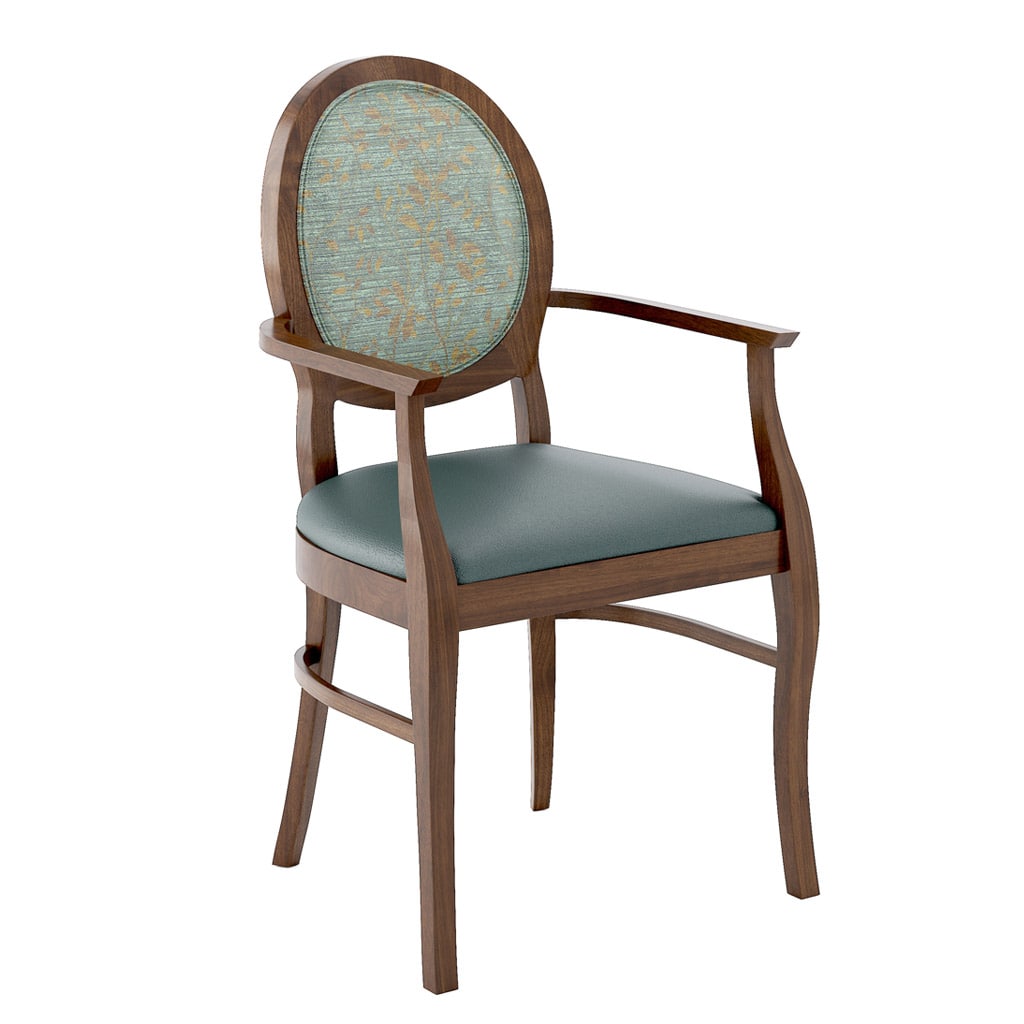
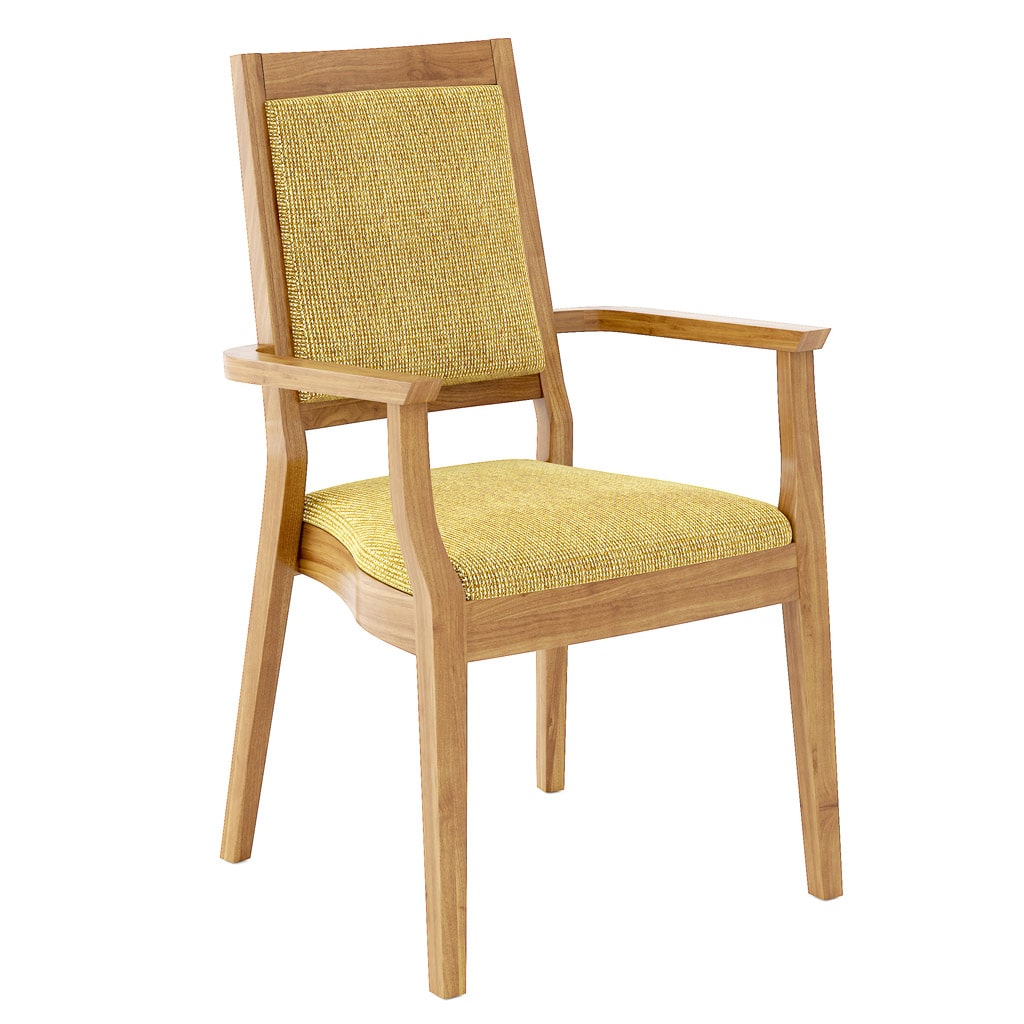
Morning light moves across the room, revealing warm wood tones, soft fabrics, and familiar shapes of the furniture that make the space seem calm and inviting. Nothing about the room feels clinical. Cheerful finishes and stylish designs create a cozy, comfortable environment – more like a home than a care setting.
As the day unfolds, it becomes clear that the furniture is much more than an attractive design choice.
The day starts with unassisted movement. A resident sets her book on the table and shifts forward in her chair. She places both hands on the arms and pushes to stand. The arms provide a steady, reliable grip. They support her balance and reduce any hesitation. The resident rises with confidence instead of waiting for someone to help.
For caregivers, this unremarkable moment sets the tone for the rest of the day. When residents can assist in their own movement, the staff avoid unnecessary lifting and reduce physical strain before the day fully begins.
Midday: Constant Use, Constant Support
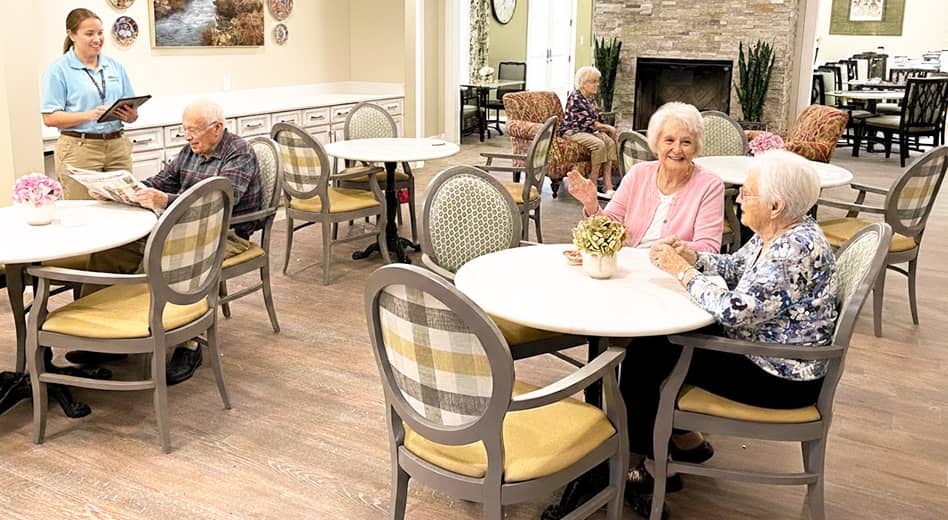
By midday, the chair has already seen steady use. The residents gather for meals. Program directors introduce creative activities. Residents sit, stand, reposition, and settle again as friends stop by for a chat. Each movement tests the chair.
The strong arms guide controlled transitions. A stable frame keeps the chair grounded. The seat supports posture over longer periods, not just a few minutes.
Caregivers move from resident to resident, keeping the day on track. They rely on chairs that support safe interactions without slowing them down. When the chair works for residents, they gain independence. When it supports caregivers, the workflow stays smooth.
Afternoon: Spills, Cleaning, and Reset
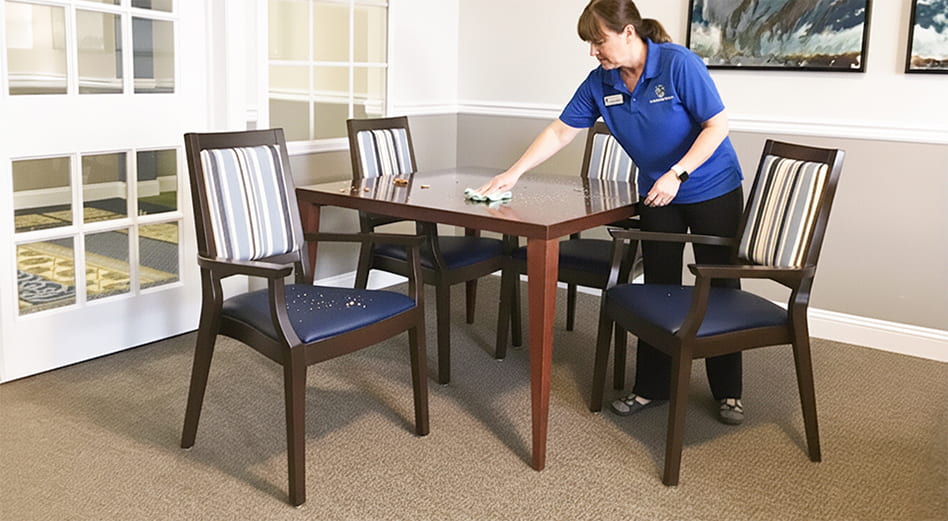
Spills and messes happen throughout the day, from coffee blunders to crumbs leftover from the lunch biscuits. Staff step in and wipe the surfaces down. Performance fabrics handle daily cleaning, moisture resistance, and repeated sanitizing.
Cleanability protects more than appearance. It supports hygiene standards and keeps the environment consistent, especially for those with weaker immune systems. Cleanability plays a critical role in daily operations. Without special treatment or downtime, the chair returns to use within moments, ready for the next resident.
Evening: Built to Last
Evening brings a few more visitors, quieter moments, and longer stretches of sitting. Such high-traffic environments demand more than typical residential furniture. Frames must hold up under constant movement. Joints must stay tight. Materials must maintain their integrity over time without sacrificing the design intent of the space.
Commercial-grade construction stands up to constant wear and movement. Long warranties reinforce reliable performance. This level of durability reduces replacement cycles for senior living communities. Fewer replacements mean fewer disruptions for the residents and caregivers, lower long-term costs, and less hassle across the community.
More Than a Seat
Over the course of the day, the chair sustained every interaction, movement, and moment of care. While it looked like comfortable furniture from home, it was designed for this kind of care. It:
- Supported safe, confident sit-to-stand transitions
- Reduced physical strain on caregivers
- Provided stability and comfort during extended use
- Allowed for quick, effective cleaning
- Maintained a consistent, welcoming appearance
- Withstood constant use without compromise
The chair never called attention to itself, but it shaped how the senior living community functioned. With seating performing at this level, it supports both the people who live there and the teams who care for them.
As night falls, the chair does not leave the floor. It’s ready to do it all again tomorrow.

Ready for a quote?
Chat with a dedicated sales rep today!