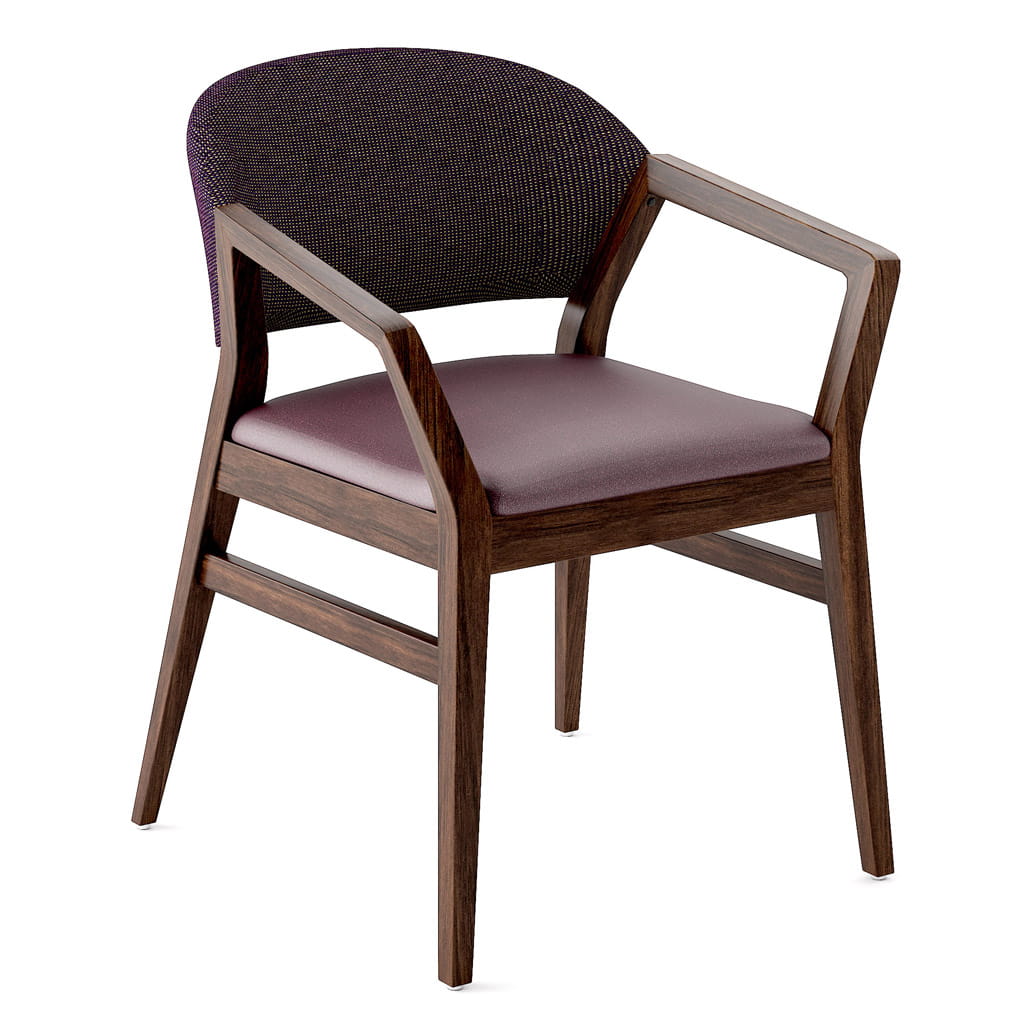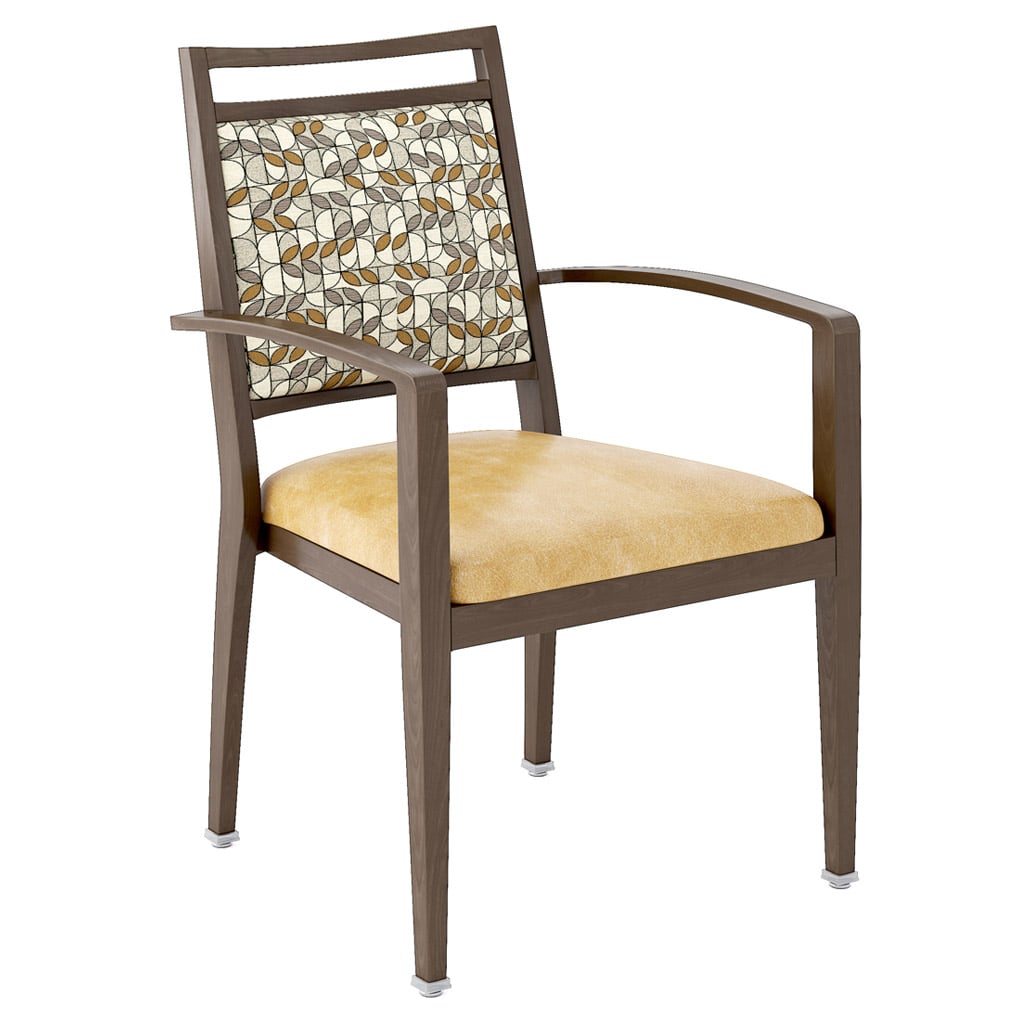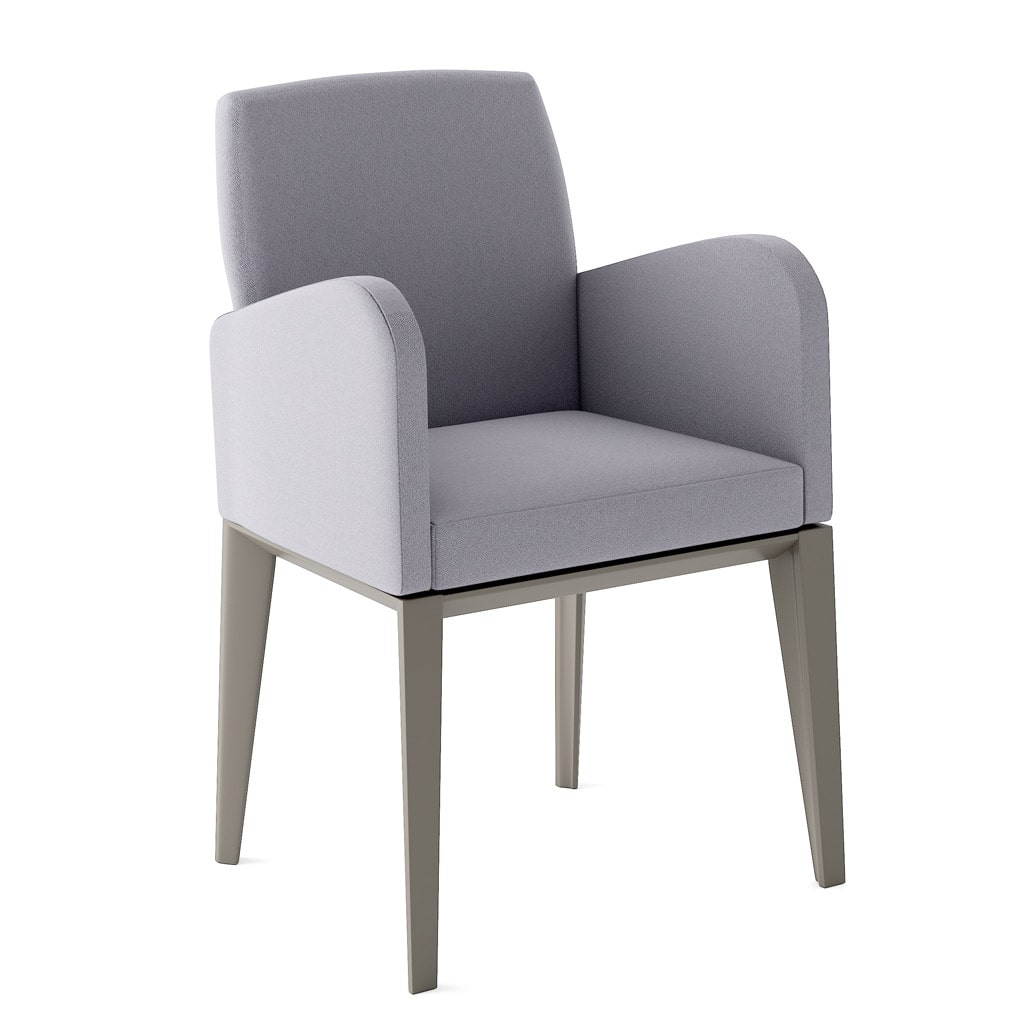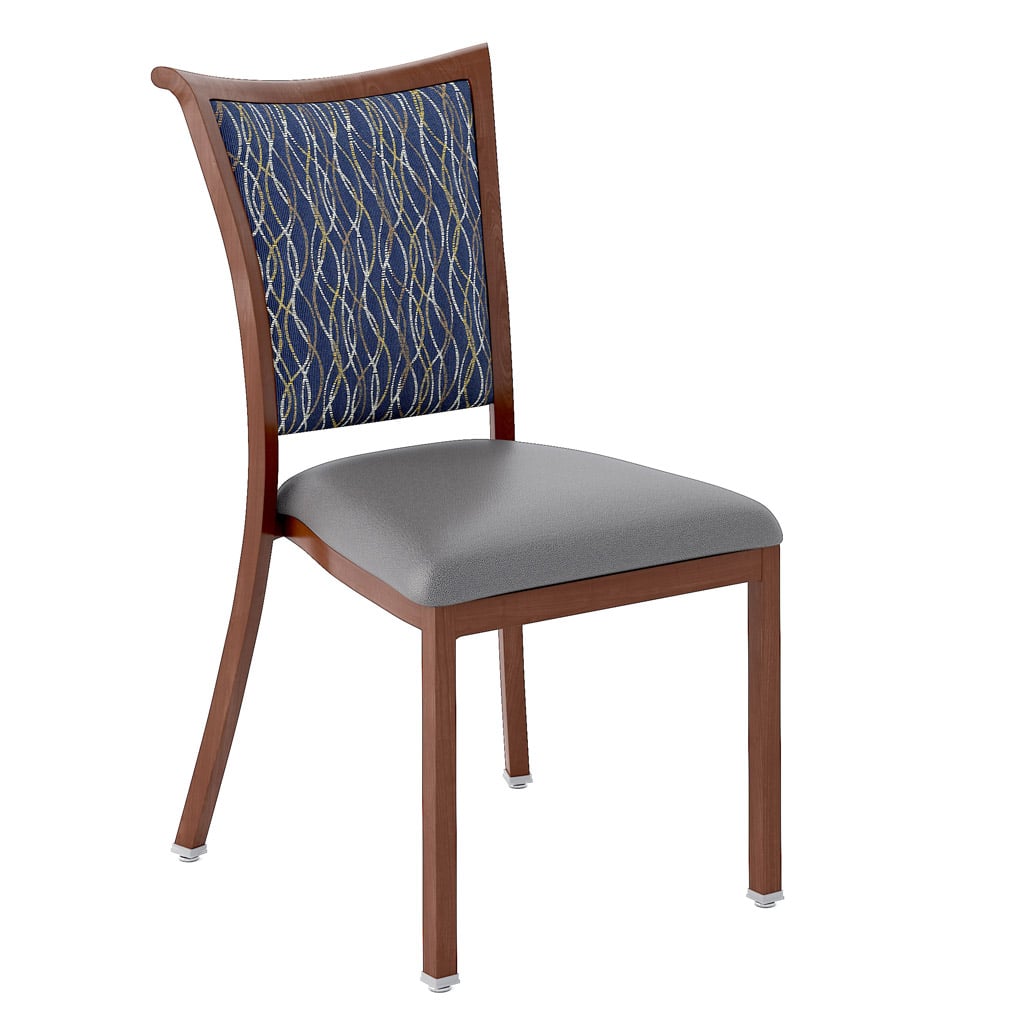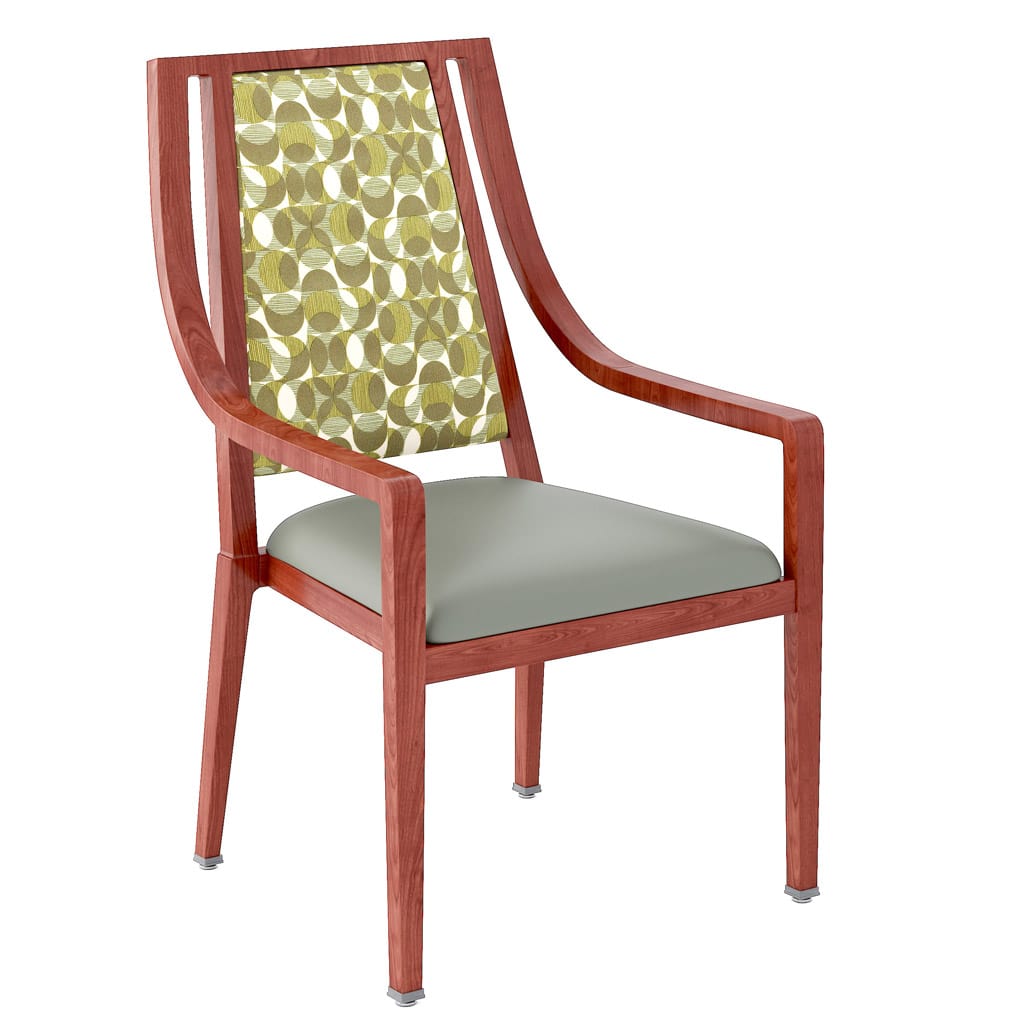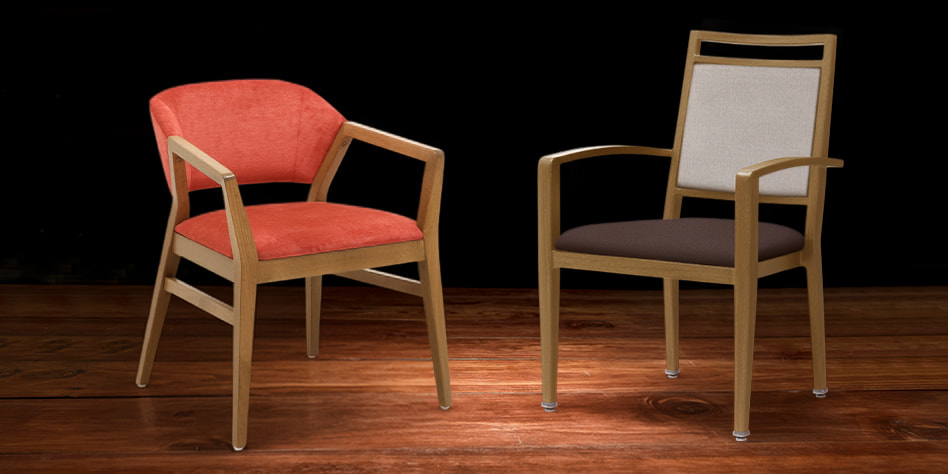
Commercial properties need seating that balances beauty, comfort, and practicality. Hotels, restaurants, event centers, and senior living facilities all face this same challenge. We often hear one common question from our clients: What is the difference between real wood furniture (hardwood) and faux wood, and what are the advantages of each?
Faux wood and hardwood chairs come with different price points, but hardwood options usually cost a bit more. Many people assume hardwood chairs carry a much higher price tag, but that assumption does not always hold true. Custom fabrics and wood finishes usually have a bigger impact on price than whether the frame is hardwood or faux wood.
If you want hardwood chairs, you can find options that fit your budget.
Durability, climate, maintenance, and design flexibility also play a major role when you compare these commercial chair types. Let’s take a closer look at how each material performs so you can choose what works best for your space.
What Is Hardwood Furniture?
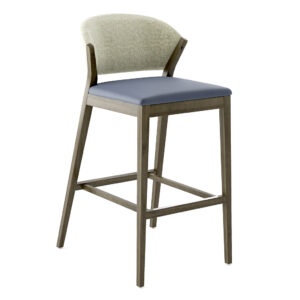
High-quality hardwood chairs use strong, natural woods such as European beechwood, oak, teak, or walnut. These materials offer natural beauty, long-lasting strength, and the ability to take on rich stains and finishes.
Manufacturers often make residential wooden chairs from softer woods like maple, pine, spruce, or fir. These materials work well for light household use but do not stand up to the demands of commercial environments.
Holsag by MityLite crafts its hardwood chairs in North America using 100% sustainably harvested European beechwood. Skilled artisans hand-sand and hand-stain each chair, then apply a durable catalyzed lacquer that resists cracking and chipping. Holsag builds many chairs with mortise-and-tenon joints for long-term stability and backs each product with an industry-leading 10-year warranty.
Advantages of Hardwood Chairs
- Long-lasting with proper care
- Elegant, timeless appearance
- Warm to the touch in cool climates
- Endless customization options
- Can be refinished to look like new after years of use
Cons of Hardwood Chairs
- Heavier than faux wood; not ideal for quick reconfiguration
- Can be damaged permanently by humidity or water
- Generally, they do not stack for storage
- Can be damaged by sanitizers and chemical cleaners
- Require occasional maintenance or refinishing
Hardwood chairs bring natural warmth and a luxurious feel, which makes them a strong choice for front-of-house spaces like lobbies, waiting rooms, and restaurant dining areas. They also work well in hotel rooms, offices, and other areas where staff do not need to move furniture often.
On the downside, hardwood chairs tend to feel heavy for their size and can be difficult to move. That makes them a poor fit for spaces that require frequent rearranging. If you need event seating, for example, wood chairs weigh more and take up more storage space than typical banquet chairs with faux wood or metal frames. Real wood chairs can also develop deep scratches and dents without proper care.
Wood furniture also reacts to its environment. Moisture, humidity, sea salt spray, and harsh chemical cleaners can damage the material over time. If your space sees frequent spills or requires strong cleaning products, faux wood chairs may offer a better solution. Restaurants in humid climates can install dehumidifiers to help protect wood furniture if they choose to use it.
What Is a Faux Wood Chair?
Manufacturers typically build faux wood chairs with aluminum or steel frames and finish them with a wood-patterned coating. Holsag by MityLite uses 100% aluminum frames, then powder-coats and bakes them to create a realistic wood grain finish. This process delivers the look and texture of real wood with the strength of metal.
Some manufacturers also produce faux wood furniture using powder-coated steel, recycled wood fibers, or PVC-based composites.


Pros of Faux Wood Chairs
- Durable (with proper maintenance)
- Lightweight and easy to move around
- Can be stacked (depending on the model)
- Resistant to dents, moisture, and temperature changes
- Less expensive than hardwood
- Easy to sanitize (generally not damaged by chemical cleaners)
Cons of Faux Wood Chairs
- Shorter lifespan than hardwood chairs
- Limited customization for frame finishes
- Can’t be refinished
- Susceptible to small surface scratches
- Can feel cold to the touch in winter
Faux wood chairs perform well in banquet halls, restaurants, event spaces, and humid environments where clients prioritize durability and easy maintenance. Their easy-to-clean surfaces also make them a popular choice for medical waiting areas.
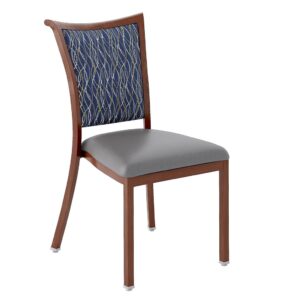
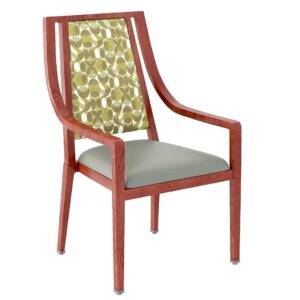
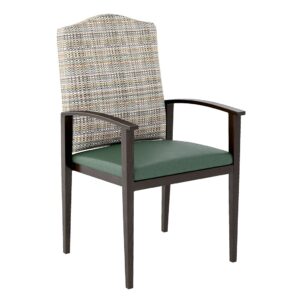
Side-by-Side Comparison: Real Wood Furniture vs. Faux Wood from Holsag by MityLite
Choosing the Right Chair Material for Your Property
The choice between hardwood wood or faux wood chairs depends on property needs, usage, climate, budget, and aesthetic goals.
This quick guide narrows down the pros and cons:
When to choose real wood furniture
- You want a warm, classic aesthetic
- Your climate is temperate or cool
- Furniture is stationary
- You value natural, sustainable materials
- You’d like unlimited stain and finish options
When to choose faux wood furniture
- Your space experiences high humidity or temperature changes
- You need lightweight, stackable seating
- You want easy maintenance and cleaning
- You require fast setup and teardown flexibility
- You prefer durable, scratch-resistant furniture
Environmental Considerations
Manufacturers produce both hardwood and faux wood as eco-conscious options when they follow responsible practices. Holsag by MityLite builds its hardwood chairs from sustainably harvested wood sourced from FSC® Certified forests, where new growth exceeds harvesting. They manufacture faux wood chairs from 100% recyclable aluminum, which helps reduce waste and extend product lifespan.

The Final Verdict
No single chair material fits every commercial space. Both hardwood and faux wood chairs deliver long-term value, durability, and style. Faux wood options typically cost less, while hardwood chairs last for decades. Your choice should reflect your property’s needs, your local climate, and your priorities for customization and convenience.
Whichever you choose, Holsag offers expertly crafted options built for beauty, strength, and lasting comfort.

Find the Best Wood or Faux Wood Chairs
Find the perfect chairs for your space today or contact our team to explore all available styles and finishes.
Frequently Asked Questions
Which lasts longer: faux wood or real wood chairs?
Although both types of chairs can last for 10 years or more, wood chairs last longer.
- Hardwood chairs can be refinished and maintained indefinitely, making them a potentially lifetime investment. The only caveat to this is that real wood chairs need occasional polishing or refinishing, and wood may not last well in humid environments.
- Faux wood chairs with a powder-coated aluminum frame are more durable than real wood in humid areas, and the frame can resist damage for many years. However, faux wood frames may eventually scratch. Faux wood chairs can’t be refinished. Both types of chairs may have upholstery that will need replacing over time.
Is faux wood recyclable?
Yes. Holsag faux wood chairs are made from 100% recyclable aluminum.
Which is better for humid climates?
Faux wood performs better in humidity, since it won’t warp or swell. In addition, faux wood furniture doesn’t attract insects like termites, beetles, or ants.
Which type of chair is more comfortable?
Hardwood feels warmer to the touch, which is preferable in cold climates. Faux wood feels cooler, which can be refreshing in warm weather climates. This is because wood doesn’t conduct heat as well as metal. Metal frames like aluminum are efficient conductors. A metal surface will pull heat away from a person’s body, leaving a lingering feeling of coolness. This could be an advantage in hot climates. But, on a cold winter day, faux wood furniture can feel uncomfortably cold.
Which offers more design flexibility?
Hardwood chairs offer more customization options. Natural wood accepts any stain or finish, while faux wood has limited color variations. Both hardwood and faux wood chairs with upholstery are available in a wide variety of standard and custom fabrics, including C.O.M. (Customer’s Own Material).